


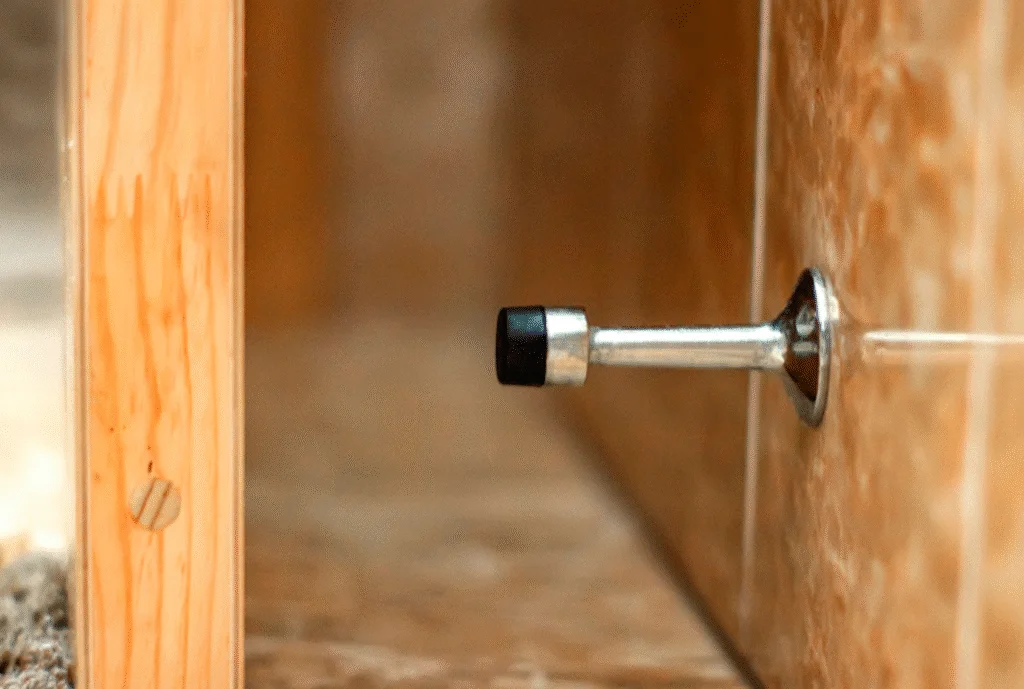
Though often overlooked, doorstops are crucial in residential and commercial buildings. No matter how careful you are with opening the door, you need doorstops to avoid doing severe damage to your door and the surrounding area. A sudden strong gust of wind or too much exertion and your door handle can put a huge dent in your wall or door. While its primary function is to prevent the wall from getting dinged, it also brings other benefits to your home. So, let’s examine the various benefits of installing a doorstop.


Protecting Your Door and Wall
A doorstop’s primary and most obvious benefit is protecting your door and wall. A door with a smooth, high-quality hinge will likely swing open at an incredible speed, causing the door side or door handle to collide with the adjacent wall with force. The wall may develop dents where the door side or handle is striking, giving it a poor appearance. Installing a doorstop to your door or wall helps prevent such issues from happening.
Reduce Maintenance Costs
If you haven’t installed a doorstop, you might be surprised to know the time and expense required to repair the damage. When a door is repeatedly slammed into a wall, the repercussions go beyond mere paint chipping. The impact can cause damage to the wall underneath that. Fixing that issue requires a series of steps by the maintenance personnel, including applying mud, patching, and sanding the area. After it’s done, the personnel must repaint the affected parts of the wall to match the existing color. This pursuit can be challenging, not to mention achieving the correct finish.

Adding to Decor
While most people view doorstops as useful objects that perform the important function of safeguarding doors, there is more to it. They can also contribute to the aesthetic of an indoor area, enhancing the visual appeal. Take, for instance, wall-mounted door stops crafted with a polished bright gold finish – it can seamlessly complement the overall look of your door and doorway. Today, you can easily find doorstops in various finishes, allowing you to elevate the appearance of a space while protecting your door and wall.
Increasing Your Door’s Security
Some varieties of door stop, such as security doorstops, can help enhance the security of your doorway. These doorstops are meticulously crafted to cater to high-traffic scenarios where doors might be used repeatedly or get rough treatment. For example, you can consider the instance of a restaurant kitchen door. It may be swung open with force numerous times throughout the day. Security doorstop features a durable material around its stud that prevents the door from being damaged when it collides with the wall. Additionally, these doorstops tend to be flame resistant, ensuring their resilience even in extreme conditions. All these characteristics make your doorway more secure, amplifying the value of your door.
At DK Hardware, we have a range of premium door stoppers for sale. These are available in varying designs, so you can choose the one that suits your needs. Here are a few doorstops available at DK Hardware:
- CRL CRL Door Stop for Bi-Passing Doors: 1155
- CRL Dark Bronze Floor Mounted Heavy-Duty Door Stop with Hook and Holder: DL2521DU
- CRL Satin Chrome Wall Mounted Heavy-Duty Door Stop with Hook and Holder: DL2531A
- CRL Dark Bronze Floor Mounted Heavy-Duty Door Stop: DL2522DU
- Perfect Products DoorSaver II Residential Hinge Pin Door Stop Matte Black: 01278
- CRL Door Mounted Stop and Holder Replacement Tip: J4557
- CRL Bronze Wall Mounted Convex Type Door Stop: DL2511DU
- CRL Polished Brass Wall Mounted Heavy-Duty Door Stop with Hook and Holder: DL2531PB
- CRL Bronze Wall Mounted Concave Type Door Stop: DL2512DU
- Deltana Replacement Bumper Ring For Floor Door Stops Round Gray: UFB4505RUB
Types of Doorstops
Doorstops come in different types, each designed to suit specific needs and spaces. Choosing the right one depends on where you want to install it and how often the door is used. Understanding these options will help you pick the most suitable solution for your home or workplace.
Common Types of Doorstops
- Doorstop Wall Mounted:
A doorstop wall mounted option is fixed directly to the wall. It helps prevent the door handle from hitting and damaging the wall. This type is ideal for areas where space is limited and you want a clean, minimal look.
- Floor Doorstop:
A floor doorstop is installed on the floor behind the door. It is strong and durable, making it perfect for heavy doors or high-traffic areas like offices and commercial spaces.
- Spring Doorstop:
A spring doorstop is a flexible, coil-shaped stopper usually attached to the baseboard. It absorbs impact when the door hits it and gently bounces back, reducing damage and noise.
- Rubber Doorstop:
A rubber doorstop is a simple and portable option. It is placed under the door to hold it in position and prevent movement. This type is easy to use and works well for both homes and temporary setups.
Choosing the Right Type
- Use wall-mounted options for protecting walls
- Choose floor doorstops for heavy doors
- Pick spring doorstops for flexible impact control
- Use rubber doorstops for quick and portable use
For a wide range of options, you can explore Door Stops and Holders to find the right type that fits your needs and enhances both protection and convenience.
Also Read : How to Choose Interior Door Hardware: A Comprehensive Guide by DK Hardware
How to Choose the Right Doorstop for Your Space
Choosing the right doorstop is important to protect your doors and walls while keeping your space functional and safe. With different types available, selecting the right one depends on your needs, door type, and usage.
Factors to Consider
- Door Type and Weight:
Heavy doors need stronger options like a floor doorstop, while lighter doors can work well with simpler designs. - Installation Location:
Decide where you want to install it:- Wall → choose a doorstop wall mounted option
- Floor → go for a floor doorstop
- Baseboard → consider a spring doorstop
- Usage Frequency:
For high-traffic areas, choose durable and heavy-duty doorstops. For occasional use, a rubber doorstop can be enough. - Level of Protection Needed:
If your goal is to prevent strong impact damage, go for fixed and sturdy options. For basic door holding, simpler types will work. - Ease of Use:
If you want something quick and portable, a rubber doorstop is easy to use without installation. - Design and Finish:
Doorstops come in different styles and finishes. Choose one that matches your interior for a clean and polished look.
Common Mistakes to Avoid
- Choosing a weak doorstop for heavy doors
- Installing in the wrong position
- Ignoring durability for high-use areas
Helpful Tip
Always consider both function and placement before choosing. A well-selected doorstop not only protects your space but also improves convenience and long-term performance.
You may also like to read : The Ultimate Guide to Commercial Door Hardware
Common Mistakes to Avoid When Installing Doorstops
Installing a doorstop may seem simple, but small mistakes can reduce its effectiveness and lead to damage over time. Avoiding these common errors will help you get the best results and protect your doors and walls properly.
Mistakes to Watch Out For
- Installing in the Wrong Position:
Placing the doorstop too far from the impact point won’t stop the door handle from hitting the wall. Proper positioning is key. - Choosing the Wrong Type:
Not all doorstops work the same way. Using a light-duty option for a heavy door can lead to poor performance. - Ignoring Door Movement:
Doors open differently depending on hinges and space. Not considering the door’s swing can make the doorstop ineffective. - Using Weak Installation Methods:
Loose screws or improper fixing can cause the doorstop to come off over time, especially in high-use areas. - Not Checking Surface Compatibility:
Installing a doorstop on weak or uneven surfaces can reduce its stability and durability. - Overlooking Height and Alignment:
If the doorstop is not aligned with the point of impact, it won’t provide proper protection. - Skipping Regular Checks:
Over time, doorstops can loosen or wear out. Not checking them regularly can reduce their effectiveness.
Helpful Tip
Before installing, open the door fully and check where it naturally hits. Place the doorstop at that exact point for the best protection and performance.
Conclusion
Doorstops may seem like a small addition, but they play an important role in protecting your space and improving everyday convenience. From preventing damage to doors and walls to reducing maintenance costs and enhancing safety, their benefits go beyond just stopping a door.
By understanding the different types of doorstops and how to choose the right one for your space, you can make a smarter and more effective decision. Proper installation is just as important, as even a good-quality doorstop won’t perform well if it’s placed incorrectly or not secured properly.
Avoiding common mistakes and selecting the right option based on your door type, usage, and location will help you get the best results. With the right approach, a simple doorstop can offer long-term protection, improve functionality, and even add to the overall look of your space.
In the end, choosing and using the right doorstop is an easy and practical way to protect your doors, walls, and investment.


DK Hardware features a wide range of door stoppers for protecting your doors and walls. We are confident you will find your pick with different doorstoppers available. Click on any link on this blog to be redirected to some of the best options.
For any specific questions, feel free to reach out to us!
For quotation, contact via email: sales@dkhardware.com or
Toll-Free: 877-509-8040