



The first warm weekend of the year exposes everything winter has hidden. You open a window and notice the track is packed with dead insects and grit. You pull the refrigerator out to sweep and find a year’s worth of dust on the coils. The range hood filter is opaque with grease – maintenance that can’t wait any longer.
A proper spring cleaning checklist turns a vague weekend project into a structured plan with a defined endpoint. This guide breaks down every major area of the house, separates deep cleaning from surface cleaning, and includes hardware and fixture checks that most cleaning guides don’t cover – because those are the items that, left unaddressed, become expensive repairs by fall.

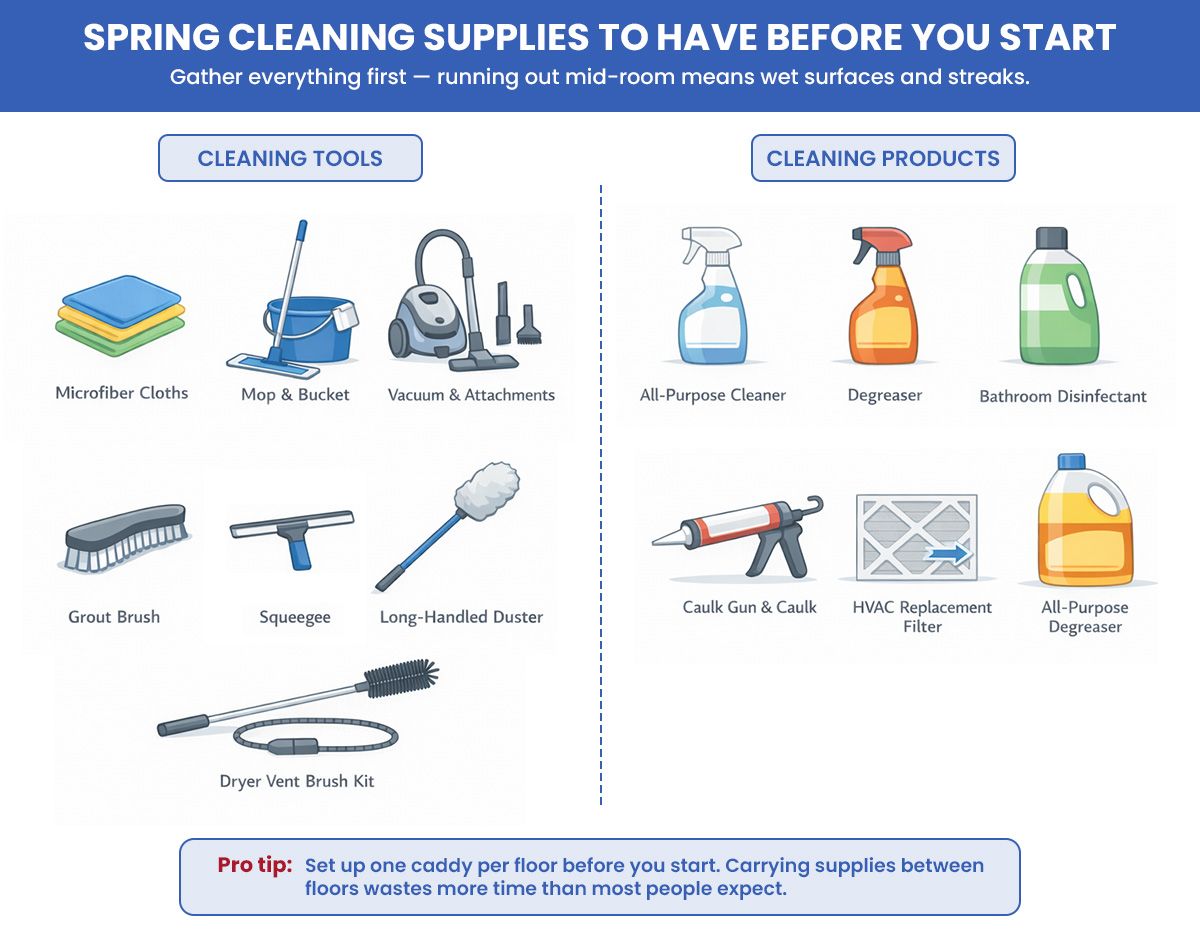
Spring Cleaning Checklist: Room-by-Room Guide
This is the core of your spring cleaning house checklist. Work top to bottom in each room ceilings and light fixtures before floors, high shelves before low ones. Gravity moves dust down; if you clean the floor before the ceiling fan, you’re cleaning the floor twice.
Download the free PDF version of this spring cleaning checklist — formatted for print, with checkboxes for every task.
Kitchen
The kitchen accumulates the densest layer of grease and particulates of any room in the house. Surface cleaning alone isn’t enough here.
Kitchen Cleaning Checklist:
- Range hood filters: remove, degrease, or replace. Mesh filters can be soaked in hot water and dish soap; baffle filters are dishwasher-safe on most units. Replace if deformed or clogged beyond cleaning.
- Cabinet interiors: remove shelf liners, wipe shelves, check for signs of moisture or pest activity, re-line
- Cabinet hardware: tighten any loose hinges, pulls, or knobs; check soft-close mechanisms for alignment
- Refrigerator coils: pull fridge away from wall, vacuum coils at the back or underneath – clogged coils run the compressor harder and shorten appliance life
- Refrigerator drip pan: locate under or behind the unit, empty and sanitize
- Oven interior: if not self-cleaning, use an oven cleaner per manufacturer spec; wipe door gasket
- Dishwasher door seal: inspect the rubber gasket for mold and tears; clean with a diluted white vinegar solution
- Under-sink cabinet: check P-trap for slow drips, inspect supply lines for corrosion or mineral buildup, remove and wipe the cabinet floor
- Caulk around sink and backsplash: probe any cracked or missing caulk with a fingernail – recaulk if it gives or has lifted from the surface
- Garbage disposal: clean with ice and coarse salt, then citrus rinds
- Wipe down walls and backsplash (spring cleaning walls applies especially here – grease splatter creeps further than you’d expect)
- Floor: sweep, mop, and pull appliances for the strip of floor underneath
⚠️
Warning: A range hood filter that’s visibly brown or opaque with grease is a fire hazard. Kitchen fires propagate through grease-coated ductwork faster than through open space. If the filter hasn’t been cleaned since last spring cleaning, start here before anything else in the kitchen.
Bathrooms
Bathroom Cleaning Checklist:
- Grout lines: scrub with a stiff grout brush; seal if grout is more than 2 years old and shows water absorption
- Caulk at tub and shower perimeter: check for any gaps, lifting edges, or black mold infiltration – failing caulk at the tub-to-wall joint is the leading cause of water damage behind bathroom tile
- Exhaust fan: remove the cover, vacuum the fan blades and housing; a clogged bath fan leaves moisture in the ceiling cavity
- Under-sink: repeat under-sink inspection from kitchen – supply line condition, P-trap integrity, cabinet floor
- Toilet base: check for any rocking (sign of a failing wax ring) and inspect the water supply valve for corrosion
- Drain stoppers: remove, clean hair and soap buildup from the mechanism, reinstall
- Showerhead: if flow has dropped, remove and soak in white vinegar for 30 minutes to dissolve mineral deposits
- Medicine cabinet: discard expired medications, check mirror for delamination at the edges
- All hardware (towel bars, toilet paper holders, grab bars if present): confirm all anchors are tight; wobbling hardware at the wall anchor point means the drywall anchor has failed and needs replacement
Bedrooms
Bedroom Cleaning Checklist:
- Mattress: rotate head-to-foot (and flip if it’s a double-sided mattress); vacuum the top surface and sides
- Under-bed: pull out and vacuum; anything stored under the bed needs to come out, be assessed, and either return in a sealed bin or be relocated
- Closet clear-out: pull everything, wipe shelves and walls, assess clothing for donation – this is the core spring cleaning closet task
- Closet hardware: check closet rod brackets, shelf pins, and any track hardware for sliding doors; loose shelf pins are a fall hazard when loaded
- Window tracks: clean out debris with a dry toothbrush or small vacuum attachment, then wipe with a damp cloth
- Baseboards: wipe down with a slightly damp microfiber cloth
- Ceiling fan: wipe each blade (use a pillowcase to trap dust rather than knock it off); flip the rotation direction to counterclockwise for summer (creates a downdraft)
- Light fixtures: remove globes if accessible, clean inside, check bulbs
- Walls: spot-clean scuffs and handprints with a mild cleaning solution on a white cloth – test in an inconspicuous area first to confirm it doesn’t lift paint
Living Areas
Living Area Cleaning Checklist:
- Upholstered furniture: vacuum all surfaces including under cushions; spot-treat any stains per fabric care label
- Wall washing: spring cleaning walls in high-traffic living areas means wiping down from light switch height down; use a soft cloth and a diluted all-purpose cleaner, working in small sections
- Light switches and outlet covers: wipe with a barely damp cloth; remove outlet covers and vacuum behind them annually
- Ceiling fan: same rotation flip as bedrooms
- Window treatments: curtains can often be machine-washed on a gentle cycle; blinds can be wiped slat by slat or vacuumed
- Fireplace: if wood-burning, inspect the firebox for cracked firebrick; confirm the damper opens fully; schedule a chimney sweep if there’s been regular use
- Baseboards and crown molding: vacuum with brush attachment, then wipe
- Area rugs: take outside and beat, or rent a carpet cleaner for heavy soiling
- Electronics: dust all surfaces; vacuum vents on TVs, game consoles, and receivers – heat buildup from blocked vents shortens electronics lifespan
Basement, Garage, and Utility Areas
These spaces handle the mechanical systems that run your house. Spring is the right time to inspect them before peak-load summer operation.
Garage Cleaning Checklist:
- HVAC filter: replace regardless of visual condition – a fresh filter at the start of cooling season is standard practice, not optional
- HVAC unit exterior (if central AC): remove the cover if you’ve winterized it, clear any debris from around the condenser, and confirm the fins aren’t bent
- Water heater: check the pressure relief valve (lift the lever slightly, let it snap back — water should flow and stop cleanly); inspect the base for rust or moisture
- Sump pump: pour water into the pit to confirm the float triggers the pump and the discharge line is clear
- Smoke and CO detectors: test every unit; replace batteries in all detectors at spring cleaning regardless of low-battery warning
- Weatherstripping and door sweeps: inspect every exterior door and the door from the house to the garage – this is the most commonly missed insulation maintenance task. A failed garage-to-house door sweep creates a direct air pathway and is a code issue in newer construction.
- Garage door hardware: check all hinges, rollers, and the torsion spring hardware for rust or wear. Do NOT attempt torsion spring replacement yourself – the stored energy in a wound spring is enough to cause serious injury. If the spring looks corroded or cracked, call a professional.
- Garage floor: sweep and assess any concrete cracks or staining from fluid leaks
💡
Pro Tip: Before you replace every smoke detector battery as part of your spring cleaning schedule, note the manufacture date on the back of each unit. Smoke detectors older than 10 years must be replaced entirely – a fresh battery in a 12-year-old detector is false security. The National Fire Protection Association (NFPA) 72 standard requires replacement after 10 years.
Also Read: HVAC Maintenance Guide 101
Outdoor and Exterior Spring Cleaning Checklist
The outdoor spring cleaning checklist has two components: the building envelope (what keeps weather out) and the yard and hardscape.
Exterior Structure
Checklist:
- Gutters and downspouts: remove debris, flush with a garden hose, confirm downspouts discharge away from the foundation. Gutters clogged at the start of spring rain season cause the bulk of basement moisture problems.
- Window screens: inspect for tears, check frame for warping, and reinstall or replace before bugs arrive
- Exterior caulk: check all window and door perimeters where the caulk contacts the siding. Crack or separation at the top edge is the most common failure point.
- Door thresholds and door sweeps: inspect all exterior entry doors for a complete seal at the sill; after a wet winter, threshold hardware is frequently corroded or loose
- Siding: wash down with a low-pressure spray or siding cleaner; look for any cracked caulk, missing paint, or soft spots that indicate moisture intrusion
- Deck or patio: check deck boards for rot, loose fasteners, and raised screw/nail heads; test deck ledger connection at the house if accessible
Yard and Landscaping
Checklist:
- Debris removal: rake out dead leaves, thatch, and winter-killed plant material
- Dead plant trimming: cut back ornamental grasses and perennials that weren’t cut in fall
- Assess irrigation: if you have in-ground irrigation, open the system slowly, walk each zone, and check for broken heads or spray patterns that have shifted
- Garden beds: pull early weeds before they establish root systems
- Tool shed/garage inventory: clean, oil, and sharpen hand tools; check for cracked or loose handles on rakes, shovels, and hoes; properly dispose of any leftover pesticides or herbicides from last season per local regulations
Also Read: Check Out Our Garden Tool Cleaning Guide before Gardening Season begins
Deep Spring Cleaning Checklist: This is What Most Homeowners Skip
Surface cleaning is what you do every spring. Deep spring cleaning is the second-pass work that most homeowners defer until something fails. Schedule it as a separate day from your room-by-room surface clean – these tasks require moving appliances, disassembling fixtures, or accessing spaces you don’t ordinarily enter.
Deep cleaning checklist:
- Dryer vent duct: Disconnect the dryer from the wall, detach the duct, and run a dryer vent cleaning brush kit through the full length. If the duct runs more than 10 feet or has multiple bends, lint accumulation is significant.
- Refrigerator coils: If you didn’t do this in the kitchen pass, do it now — pull the unit out completely
- Behind and under the range: Pull the range away from the wall; clean the floor, side walls, and the back of the appliance
- Washing machine drum and door seal: Run a hot cleaning cycle with a washing machine cleaner tablet; wipe the door gasket inside the fold where mold accumulates
- Window and door caulk (full inspection): Check all exterior-facing caulk joints for cracking, separation, and compression failure. Recaulk any joint where a fingernail can probe the gap.
- Attic insulation visual: If accessible, check for moisture staining, which indicates a roof leak or ventilation problem that wasn’t obvious from the living space
- Crawl space: Check for ground moisture, pipe condensation, and pest entry points – a visual inspection twice a year is sufficient for most homes
- HVAC ductwork visual: Look for disconnected flex duct at joints, which wastes conditioned air into unconditioned space; a disconnected return duct pulls unconditioned air (and garage fumes, if near the garage) into the living space
⚠️
Warning: Dryer vent lint is the leading cause of residential appliance fires in the US, per the U.S. Fire Administration. If the full duct run has never been cleaned or hasn’t been addressed in over a year, this task moves to the top of your deep spring cleaning checklist – not the bottom.

Spring Cleaning Safety
Spring cleaning safety tips are often skipped until something goes wrong. The most common spring cleaning injuries are from falls (ladders and step stools) and chemical exposure.
Safety checklist:
- Ventilate all rooms before using aerosol or concentrated cleaners – open windows and run exhaust fans
- Read chemical labels before mixing products; many common cleaners are incompatible
- Use a ladder rated for your weight plus tools on exterior work; never lean a ladder on a gutter
- Dispose of old paint, solvents, and pesticides through a local household hazardous waste program, not the regular trash or drain
⚠️
Warning: Never combine bleach-based products with ammonia-based cleaners (including many glass cleaners). The reaction produces chloramine vapors – colorless and fast-acting, with symptoms including coughing, shortness of breath, and chest pain at low concentrations. If you’re unsure whether a product contains ammonia or bleach, read the label before opening the bottle in an enclosed space.
FAQs About Spring Cleaning Checklist
- When should I start spring cleaning?
Late March through mid-April works for most of the continental US. The practical test: daytime temperatures are consistently above 45°F, your last frost date has passed, and you’ve had at least one dry stretch of 3+ days. Exterior tasks – caulking, door seal inspection, gutter cleaning – need stable temperatures to be done properly.
2. What’s the difference between spring cleaning and deep cleaning?
Spring cleaning covers the full house on a surface and system level: all rooms, appliance cleaning, hardware inspection, and decluttering. Deep cleaning targets specific items that require disassembly, appliance movement, or hard-to-reach access – dryer vents, refrigerator coils, behind ranges, crawl spaces. Most households benefit from doing surface spring cleaning first, then a dedicated deep cleaning pass a week later.
3. How long does spring cleaning take?
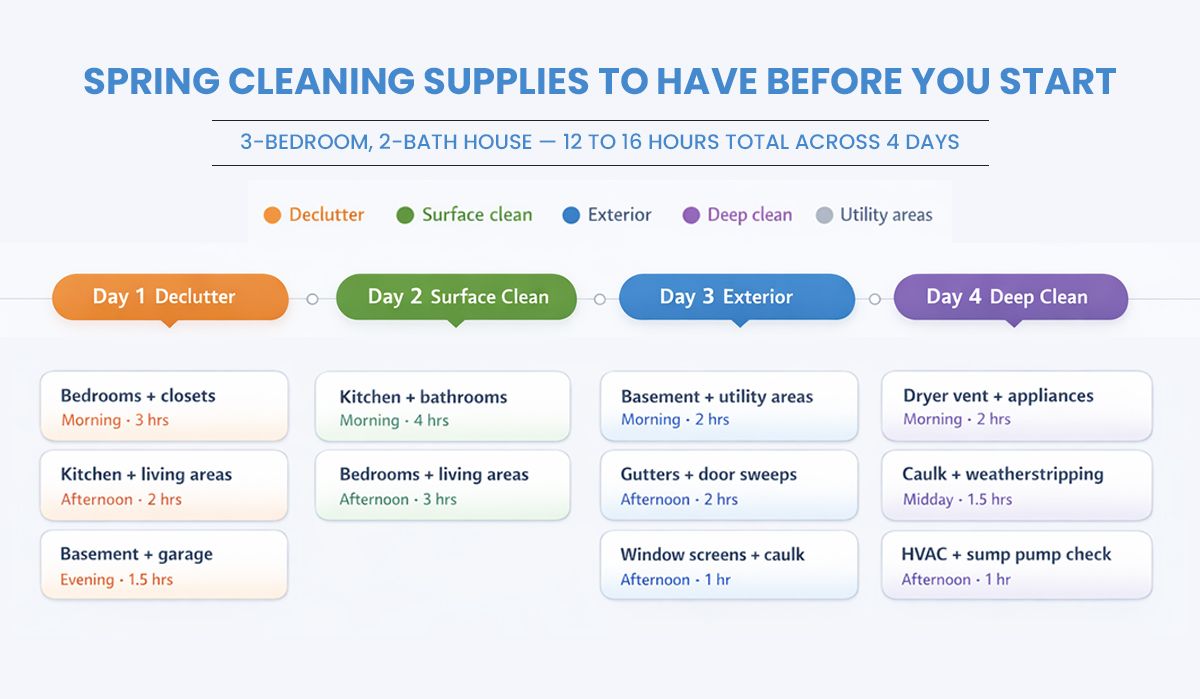
A 3-bedroom, 2-bath house runs 12–16 hours of actual cleaning time. That’s typically spread across 3-4 days if you’re also doing decluttering and an exterior pass. Apartments and smaller homes run 6-10 hours. This assumes working through the entire checklist, not just visible surfaces.
4. Do I need a different checklist for an apartment vs. a house?
The apartment spring cleaning checklist covers the same core areas – kitchen, bathrooms, bedrooms, living areas- but skips basement, utility areas, and outdoor tasks. In apartment buildings, you’re also responsible for HVAC filter replacement in most lease agreements (check yours), exhaust fan cleaning, and weatherstripping on your unit’s entry and patio doors. Report anything beyond that to building management in writing.
5. What spring cleaning tasks should I do every year?
Five tasks should be non-negotiable: HVAC filter replacement, smoke and CO detector testing (and replacement after 10 years), dryer vent cleaning, exterior weatherstripping and door seal inspection, and under-sink plumbing check in kitchen and bathrooms. Miss any of these for two consecutive years and you’re accepting the risk of fire hazard, moisture damage, or appliance failure.
Conclusion
A thorough spring cleaning goes beyond wiping down counters and mopping floors. The spring cleaning checklist that matters covers all of it: room-by-room surface cleaning, deep cleaning of appliances and ductwork, exterior inspection of the building envelope, and hardware checks on the doors, hinges, and fixtures you rely on every day.
The hardware components – door sweeps, weatherstripping, cabinet hinges, threshold seals – are easy to overlook in a cleaning context, but spring is exactly the right time to catch failures before summer heat and humidity stress them further. A door sweep that’s failing in April costs a few dollars. One that’s been failing all summer has backed moisture into the floor and frame by September.
For replacement hardware identified during your spring inspection – door sweeps, weatherstripping, cabinet hinges, door closers, or any other hardware that didn’t pass the inspection – browse DK Hardware’s complete selection of door hardware and building hardware.