


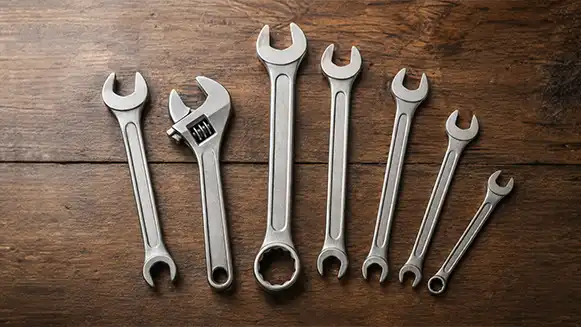
Understanding Wrench Sizing Systems (SAE vs Metric)
If you’ve ever opened a wrench set and found two sets of numbers, one in fractions and one in millimeters, you’re not alone. Wrenches are commonly made to fit SAE (standard) and metric fasteners, and understanding the difference is key to choosing the right size and avoiding stripped bolts.What’s the Difference Between SAE and Metric Wrench Sizes?
- SAE (Society of Automotive Engineers) sizes are based on inches and typically shown in fractions like 3/8″, 7/16″, or 1/2″.
- Metric wrench sizes are based on millimeters, such as 8mm, 10mm, 13mm, or 17mm.
How Wrench Sizes Are Measured?


- A 10mm wrench fits a fastener with a 10 mm-wide head
- A 1/2″ wrench fits a fastener that measures half an inch across the flats
Why Are Wrenches Often Labeled in Both Units?
Many modern combination wrenches and adjustable wrenches are marked with both SAE and metric scales. That’s because it’s common to encounter both fastener types on the same job, especially when working on newer vehicles, furniture kits, or imported hardware. Understanding wrench sizing systems helps you move faster on the job, prevents tool damage, and makes your toolset far more versatile.Wrench Size Chart (SAE to Metric Conversion)
Having both SAE and metric wrenches in your toolbox is practical, but remembering which sizes match can be a pain. That’s where a wrench size conversion chart comes in handy. Some SAE and metric sizes are close enough to be interchangeable in low-stress applications, while others differ just enough to damage fasteners. The key is knowing which conversions are near-matches and which ones aren’t.Why Conversions Matter
Let’s say you have a 13mm bolt, but no 13mm wrench in your kit. Can you use a 1/2″ wrench instead? Maybe, but tolerances matter. Even a small mismatch can cause rounding or slipping, especially if the bolt is rusted or torqued tightly. This chart helps you avoid guess game by listing common SAE and metric equivalents.|
SAE to Metric Wrench Conversion Chart |
||
|
SAE (Inches) |
Closest Metric (mm) |
Notes |
|
5/32″ |
4mm |
Slightly loose fit |
|
3/16″ |
4.5mm |
Rare metric size |
|
7/32″ |
5.5mm |
Not an exact match |
|
1/4″ |
6mm |
Very close |
|
5/16″ |
8mm |
Near match |
|
11/32″ |
9mm |
Slightly tight fit |
|
3/8″ |
10mm |
Very close |
|
7/16″ |
11mm |
Not quite the same |
|
1/2″ |
13mm |
Often interchangeable |
|
9/16″ |
14mm |
Close, but slightly tight |
|
5/8″ |
16mm |
Fair match |
|
11/16″ |
17mm |
Very close |
|
3/4″ |
19mm |
Often used interchangeably |
|
13/16″ |
21mm |
Some overlap |
|
7/8″ |
22mm |
Close fit |
|
15/16″ |
24mm |
Slight mismatch |
|
1″ |
25.4mm |
Exact conversion |
Larger Wrench Sizes for Heavy-Duty and Industrial Use
While most homeowners won’t go beyond 1-inch wrenches, certain jobs, especially in plumbing, construction, HVAC, and machinery maintenance, call for larger tools. These bigger SAE sizes often align with metric equivalents used in heavy-duty applications. Use the table below as a quick reference when working with oversized fasteners, large pipes, or structural hardware. It’s especially useful if you’re maintaining commercial equipment or assembling prefab structures.|
SAE to Metric Wrench Conversion Chart |
||
|
SAE (Inches) |
Closest Metric (mm) |
Notes |
|
1-1/8″ |
29 mm |
Common in heavy machinery & plumbing |
|
1-1/4″ |
32 mm |
Often used for industrial applications |
|
1-3/8″ |
35 mm |
Useful in large automotive bolts |
|
1-1/2″ |
38 mm |
Close match for structural hardware |
|
1-5/8″ |
41 mm |
Slightly oversized; check fit closely |
|
1-3/4″ |
45 mm |
Used in HVAC and construction work |
|
1-7/8″ |
48 mm |
Close enough for most high-torque jobs |
|
2″ |
51 mm |
Exact match for large bolt heads |
Most Common Wrench Sizes and Where to Use Them?
You don’t need a 50-piece wrench set to get most jobs done, but you do need the right handful of sizes. Whether you’re working on a car, tightening plumbing fixtures, or fixing a bike, certain wrenches tend to get used over and over again. Here’s a breakdown of the most common wrench sizes and where they show up most often:Automotive Repairs
Car work demands precision, and fastener sizes vary by make, model, and region of manufacture. If you’re doing automotive maintenance yourself, these are the most frequently used:Metric:
- 8mm & 10mm: Used on battery terminals, small bolts, and trim components
- 13mm & 15mm: Suspension and engine parts
- 17mm & 19mm: Lug nuts, brake bolts, and heavy-duty areas
SAE (Standard):
- 3/8″ & 7/16″: Older US vehicles and aftermarket parts
- 1/2″: Common for frame bolts, brake calipers, and heavy brackets
Plumbing and Home Repairs
For household plumbing, wrenches need to fit pipe fittings, faucet nuts, and sometimes fasteners hidden behind sinks. The most used sizes:- 7/16″, 1/2″, and 9/16″ – common for faucet connections and under-sink hardware
- 10mm or 13mm – often used in newer fixtures or imported fittings
- Adjustable wrenches also play a big role in tackling odd-sized or corroded parts
Bicycles, Furniture, and Everyday Fixes
A few small sizes pop up again and again around the house:- 8mm, 9mm, and 10mm – perfect for furniture assembly, wall mounts, and bikes
- 11/32″ – a lesser-known SAE size, but often found in lawn equipment or small appliances
Types of Wrenches and When to Use Each
Choosing the right wrench size is only half the battle. The type of wrench you use can make just as much difference, especially in tight spaces, high-torque jobs, or when speed matters. Here’s a breakdown of the five most common types of wrenches, what they’re best at, and when to reach for each one:Open-end Wrench

- Pros: Quick access, ideal for wide or awkward angles
- Cons: Less contact with the fastener = more chance of slipping
- Best For: Plumbing fittings, light-duty bolts, tight spaces with no overhead clearance
Box-End Wrench

- Pros: Less chance of stripping, works well with 6-point and 12-point bolts
- Cons: Requires clearance above the fastener to slip on
- Best For: Automotive bolts, machinery maintenance, high-torque tightening
Combination Wrench

- Pros: Two tools in one, flip depending on clearance and torque
- Cons: Fixed size means you’ll need a full set to cover your bases
- Best For: DIY tool kits, contractors, and anyone wanting flexibility
Adjustable Wrench

- Pros: One tool replaces multiple fixed-size wrenches
- Cons: Less precise fit; may slip under heavy pressure
- Best For: Casual home repairs, plumbing work, bike and appliance fixes
Ratcheting Wrench

- Pros: No need to lift and reposition, great for engine bays and under sinks
- Cons: Slightly bulkier than traditional box-end wrenches
- Best For: Automotive work, HVAC, and anywhere speed and access matter
Can You Use Metric and SAE Wrenches Interchangeably?
Sometimes, yes but it actually depends on the job. A few SAE and metric sizes are close enough to be swapped in a pinch. For example:- 13mm ≈ 1/2″
- 19mm ≈ 3/4″
- 10mm ≈ 3/8″
How to Choose the Right Wrench For Your Project?
The best wrench isn’t always the biggest or the most expensive. It’s the one that fits the fastener and the situation. Here’s how to choose the right wrench:- Buy a full set if you’re just starting out. It’s more cost-effective than buying one wrench at a time, and you’ll always have the right size ready. Look for hand tool sets with both SAE and metric options.
- Use fixed wrenches for high-torque jobs. They offer better grip than adjustable ones and are less likely to slip.
- Go adjustable for quick fixes, odd sizes, or when you’re short on space. Just be sure to snug them tight before applying force.
- Choose ratcheting wrenches when speed matters like engine bays, tight spaces, or repetitive bolts.