RECENTLY VIEWED
Skip to main content

 Save 42% Save 7% Save 29% Save 48% Save 3% Save 6% Save 17% Save 17% Save 41% Save 29% Save 15% Save 12% Save 12% Save 48% Save 11%
DK Hardware Professional Tax Exempt? Net 30? - DK Net Terms
Cabinet Hinges and Rollers
Open a cabinet door, and you find out everything about the hardware behind it. It either swings clear and shuts quietly, or it sags into the door next to it and bangs. DK Hardware Supply stocks the cabinet hinges and cabinet rollers that decide which one you get: concealed cup hinges, compact face-frame hinges, offset semi-concealed hinges, glass showcase hinges, sliding roller track and drawer roller wheels. Buy one for a vanity or four hundred for an apartment turnover.
Types of Cabinet Hinges and How to Tell Them Apart?
Every concealed hinge is two pieces: a cup sunk into the back of the door and a plate on the cabinet, joined by an arm that folds as the door swings. Older styles skip the cup and screw straight to the frame.
Most cup hinges open 105 to 110 degrees, which clears a drawer below on a standard base cabinet. Corner and lazy-susan doors need a wide-angle arm to swing past the return. Wood doors run on the first five types, and a glass front belongs in glass and showcase door hinges.
Which Cabinet Hinges Fit Face Frame and Frameless Cabinets?
Look inside the box. A wood frame around the opening that the door shuts against means a face-frame cabinet, still the standard in American kitchens.
Those take compact concealed, offset or semi-concealed cabinet door hinges, all of which fasten to the frame itself. No frame, with the door sitting on the box edge, means frameless, and that takes a straight-arm hinge clipped to a plate on the cabinet side.
Hinges for cabinets built one way won't mount onto the other. Most kitchen cabinet hinges sold now are the cup type, so shop concealed cabinet hinges if your doors are already bored.
How Much Overlay Do Your Cabinet Door Hinges Need?
Overlay is how far the door sits over the cabinet edge, and it's the number people get wrong most often when ordering kitchen cabinet hinges. Measure the door you're pulling off: door width minus opening width, halved when two doors share an opening. Cabinet door hinges are sold by that figure, so nail it down before anything else.
On clip-on systems, the mounting plate does the final tuning, and it works backwards from what people expect: a flat plate gives the widest overlay, and every step up pulls the door in tighter. Order spare plates in two or three heights and you can dial in a whole kitchen on site.
Soft-Close, Self-Close or Free-Swinging Hinges for Cabinets?
Soft-close cabinet hinges carry a hydraulic damper that catches the door in the last few degrees and eases it shut. Self-closing hinges use a spring, so from a few degrees out the door pulls itself shut and stays put. Free-swinging hinges for cabinets do neither, so the door needs a catch.
- Soft-close for kitchens, nurseries and rentals where slamming gets noticed
- Self-close for garage and utility cabinets that have to stay shut on their own
- Free-swing for pantry and display doors, paired with a magnetic or roller catch from door and drawer catches
Which Cabinet Rollers Do You Need?
Three different parts get called cabinet rollers, and they don't swap:
- Sliding door wheels and track. Cabinet door rollers on bypass and showcase panels run in aluminum rollertrack, stocked in 79" and 158" lengths, with the wheels and the channel sold separately.
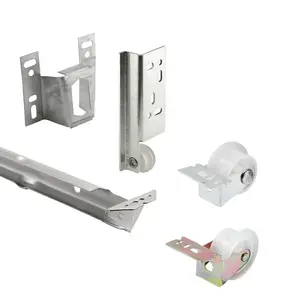
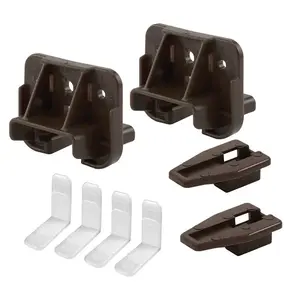
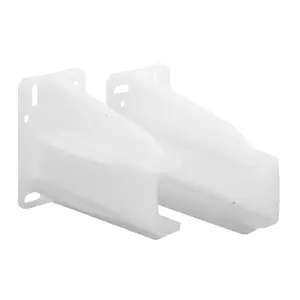
- Cabinet drawer rollers. The 3/4" roller wheels, plastic guides and galvanized track sets older wood drawers ride on. Cabinet drawer rollers sell in packs of two. To upgrade instead of repair, ball-bearing slides carry more weight and pull out farther, over in drawer components.
- Roller catches. A spring-loaded roller that grips a strike and holds a door shut, not one of the load-bearing rollers for cabinets that carry a panel.
Quick Checks Before You Reorder Cabinet Hinges or Rollers
Swapping standard cabinet door hinges for damped ones is a same-day job, and worn cabinet door rollers are a same-afternoon one. If the door is bored for a cup and the box has a clip-on plate, soft-close cabinet door hinges in the same overlay drop straight in, as long as the damper has room to travel.
Sliding doors take one test. Lift the panel slightly as you slide it, and if it moves easier, the cabinet door rollers are worn. Pull one and look for flat spots, a seized bearing or a cracked nylon tire, and order rollertrack with the new cabinet door rollers if the channel is bent.
Match the wheel diameter, groove shape and bracket offset when you order rollers for cabinets, and buy cabinet rollers in matched pairs so the door hangs square. Shimming a near-fit set of rollers for cabinets only moves the binding somewhere else. Keep a driver and a few spare screws on hand from hand tools and accessories, because stripped cup screws are what turn a ten-minute swap into an afternoon.
Which Finishes Should You Buy for Visible Hinges for Cabinets?
Nobody sees a concealed hinge, so put your money into the damper instead of the plating. Finish only shows on hardware you can see: offset and semi-concealed cabinet hinges, glass door hinges and exposed pivots.
Those come in satin nickel, oil-rubbed bronze, flat black, polished chrome, brass and brushed nickel, close enough to match the cabinet knobs and cabinet handles already on the run. Buy the visible hinges for cabinets in one finish from one brand, because two parts with the same finish name can read differently under kitchen lighting.
Buy Kitchen Cabinet Hinges in Bulk
Concealed cabinet hinges come in packs of 2, 5, 10 and 20, and the per-piece price drops as the pack grows. A twenty-pack of kitchen cabinet hinges covers ten doors with spares for the punch list.
Add ten percent to your door count, because a few always get dropped or stripped on site. Running a full set of kitchen cabinet hinges from one brand keeps the arm geometry consistent across every door, and Amerock cabinet hardware sits alongside the rest of the cabinet and furniture hardware department if you want pulls and catches on the same order.
Cabinet Hinge and Roller FAQs
Which Way Should Cabinet Hinges Swing?
Most kitchen cabinet hinges are not handed. A concealed cup hinge works on a left or a right swing, and the mounting decides the direction. Semi-concealed and wrap-around cabinet hinges often are handed and sell as left or right, so check the listing before ordering. On a bank of doors, hang them on the outer stiles so they open away from each other.
What Is the Difference Between Inset and Offset Cabinet Hinges?
An inset hinge holds the door flush inside the frame opening, so the door face and the frame sit level. An offset hinge steps the leaf back, usually 3/8", so the door laps over the frame with the barrel visible at the edge. Inset hinges show up on custom and traditional cabinetry, while offset cabinet door hinges are what most older American kitchens were built with.
How Many Hinges Does a Cabinet Door Need and Where Do They Go?
Hinges for cabinets are counted by door height. One on doors under 24", two from 24" to 36", three or more on tall pantry and wardrobe doors, and heavier panels want an extra one either way. Set the top and bottom pair a few inches in from each end and put any third hinge in the middle. Skimp on the count and the top hinge takes the load, which is what pulls screws out of the box edge on heavy solid doors.
How Do You Remove a Drawer That Runs on Cabinet Drawer Rollers?
Pull the drawer out to the stop, then lift the front while you keep pulling. Most wood drawers on cabinet drawer rollers ride over a lip at the back of the track, and raising the front an inch clears it. If it still catches, reach under and press down the plastic guide clip on the runner.
Can You Retrofit Rollers Onto an Old Wood Drawer?
Yes, and it's the cheapest fix for a drawer that scrapes. Screw a center-mount track under the drawer box, mount the wheel bracket at the back of the cabinet, and set both dead level. Check the clearance under the drawer box first, since rollers for cabinets built this way need the bottom sitting clear of the frame. Center-mount cabinet rollers sell as a track and wheel set, so order both together.
Where to Buy Cabinet Hinges and Rollers Online?
Pick your hinges for cabinets by cabinet type, overlay and closing action, add the cabinet rollers your sliding doors need, and check out.
DK Hardware has spent close to two decades supplying contractors, cabinet shops and homeowners, with millions of products across thousands of brands and warehouses around the US. Find the same kitchen cabinet hinges cheaper elsewhere and DK will match the price. Tax-exempt and Net 30 accounts are open to trade buyers, and anything past a case gets a quote through volume pricing, cabinet rollers and track included.
Need two cabinet hinges or two hundred? Contact the Support team or open a live chat any hour, read off the old part number, and the DK Hardware Supply team will match it.
Explore Cabinet Pulls
Showing: 33 Results