RECENTLY VIEWED
Skip to main content

DK Hardware Professional Tax Exempt? Net 30? - DK Net Terms
Roll over image to zoom in
Product Features
Product Overview
Related Videos
Reviews
Questions & Answers
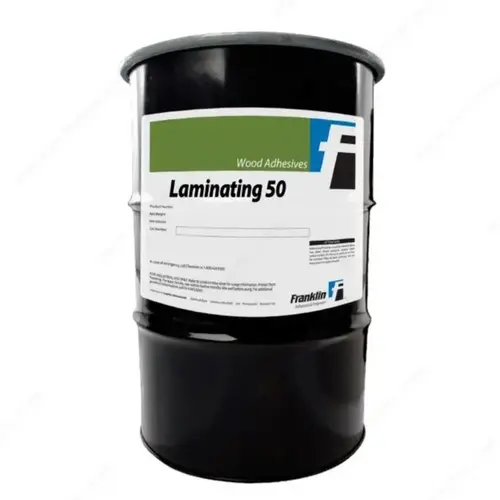
Franklin Industrial WEBSO1246013 LAMINATING 50 - HOT/COLD PINCH ROLL LAMINATION
Item #: WEBSO1246013 by Franklin Industrial
Brand: Franklin Industrial
See reviewsSee reviews
30 Days Easy Return. We are the largest supplier of the most adaptable, personalized hardware in the industry. We work hard to ensure you're satisfied with our products.
WARNING: This Product May Contain Chemicals Known to the State of California to Cause Cancer or Reproductive Harm. To Learn More Visit P65Warnings.ca.gov
Features
Recommended Use
Particleboard, Fiberboard
Base
Vinyl Acetate
Weight
2 535 lb
Viscosity
3500 cps
Features
Heavy-Duty
Production Time
Special online order - 14 days
Brand
Franklin Industrial
Product Overview
LAMINATING 50 is a vinyl acetate copolymer adhesive designed to bond HPL to particleboard and fiberboard. It can be used in a variety of applications including continuous heated-panel laminating systems, pinch roll and dead stack or limited lay-up time cold-press operations. The adhesive has high green strength and tensile strength.
Advantages And Benefits
KEY PRODUCT FEATURES
- Excellent in heated nip roll and dead stack operations
- Can be cold pressed
- Can be applied by spraying
- Great green strength and tensile strength
Application
Spread of 22 to 29 pounds of adhesive per 1,000 square feet or 10 to 13 grams per square foot of glue line is adequate. Verify adequate glue coverage by monitoring for squeeze out along the glue line once the panels are under pressure.
The assembly time is influenced by many factors, some of which include glue spread, moisture content of the stock, porosity of the stock, environmental conditions and adhesive choice. Assembly times of five to ten minutes are approximate. It is desirable to see a bead of adhesive squeeze out around the perimeter of the bottom panel of the stack
Advantages And Benefits
KEY PRODUCT FEATURES
- Excellent in heated nip roll and dead stack operations
- Can be cold pressed
- Can be applied by spraying
- Great green strength and tensile strength
Application
Spread of 22 to 29 pounds of adhesive per 1,000 square feet or 10 to 13 grams per square foot of glue line is adequate. Verify adequate glue coverage by monitoring for squeeze out along the glue line once the panels are under pressure.
The assembly time is influenced by many factors, some of which include glue spread, moisture content of the stock, porosity of the stock, environmental conditions and adhesive choice. Assembly times of five to ten minutes are approximate. It is desirable to see a bead of adhesive squeeze out around the perimeter of the bottom panel of the stack