RECENTLY VIEWED
Skip to main content

DK Hardware Professional Tax Exempt? Net 30? - DK Net Terms
Roll over image to zoom in
Product Features
Product Overview
Related Videos
Reviews
Questions & Answers
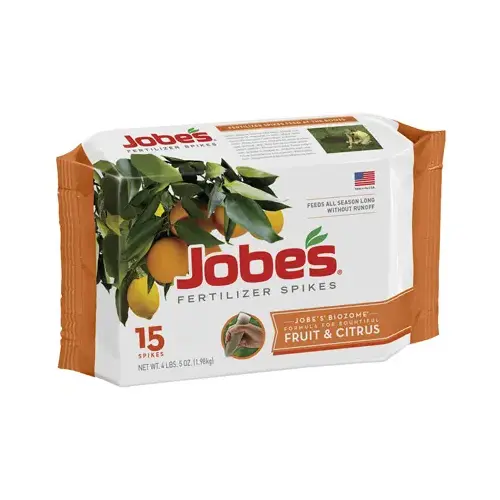
Jobe's 01612 Dry Fertilizer Spike, Spike, Gray/Light Brown, Slight Ammonia - pack of 15
Item #: 01612 by EASY GARDENER
Brand: Jobe's
UPC #: 073035016124
See reviewsSee reviews
30 Days Easy Return. We are the largest supplier of the most adaptable, personalized hardware in the industry. We work hard to ensure you're satisfied with our products.
WARNING: This Product May Contain Chemicals Known to the State of California to Cause Cancer or Reproductive Harm. To Learn More Visit P65Warnings.ca.gov
Features
- Feeds at the roots
- Easy to use - no mixing or measuring
- Feeds all season
Container Size
15 pk
Packaging Type
Bagged
Product Form
Spike
Defective Code
A
Each Weight
4.100 LB
Fertilizer Analysis (N-P-K)
8-11-11
Hazardous Material
No
Returnable
Yes
Velocity
A
Product Type
Plant Fertilizer
Organic
No
Height
9.00
Length
6.00
Width
2.50
ECCN
EAR99
Country Origin Code
US
Color
Gray/Light Brown
Form
Spike
Odor/Scent
Slight Ammonia
Fertilizer Analysis
8-11-11
Nomenclature
01612 FRUIT & CITRUS FERT SPKS
Feed Times
60 Days
Number of Spikes
15
Ships Only
Within the United States
Product Overview
SPIKE FERT FRT/CTRUS TREE 15PK
Specifications:
Specifications:
Application: For fruit, citrus and nut trees
Compositions: Nitrogen Phosphorous Potassium (Potash)
It's no secret that beautiful, healthy trees make your yard look spectacular. Jobe's fertilizer spikes for fruit and citrus trees ensure a continuous supply of nutrients below the surface, where the trees active roots are growing. Jobe's spikes are easy to insert around each tree's dripline and the slow-release formula lasts all season. No wasteful runoff, no mess, hazards or smells - only a safe beautiful yard. Spikes are specially formulated for fruit, citrus and nut trees. For best results, use Jobe's fertilizer spikes for fruit and citrus trees in early spring and late fall.