25+ Must-Have Plumbing Tools For Every Plumber and Homeowner

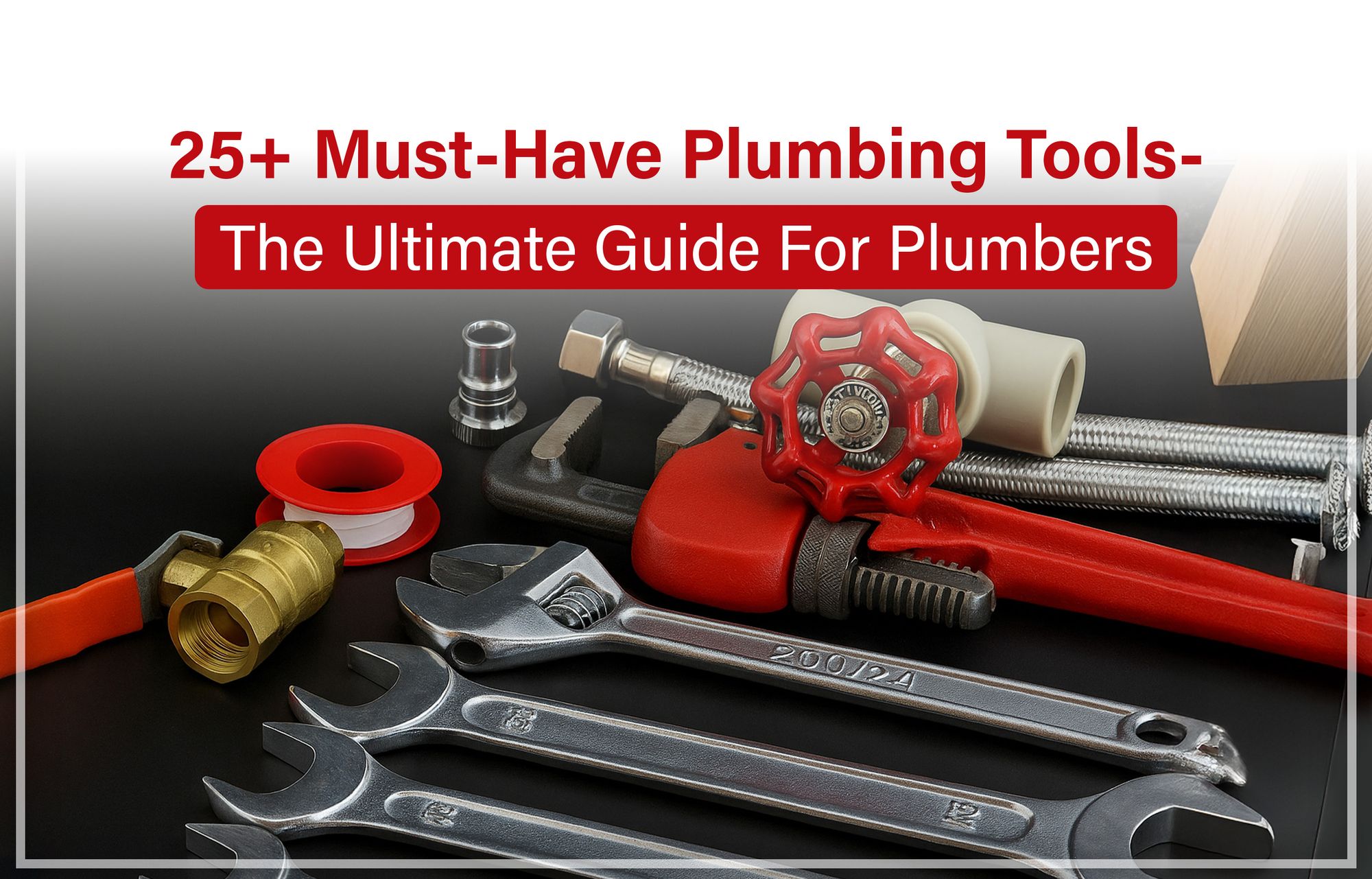
Working on plumbing issues becomes far easier when you have the right tools at hand. A well-chosen plumbing toolkit protects fixtures, cuts the risk of leaks, and ensures repairs last. Professional plumbers rely on specific tools every day because they offer precision, reach, and control that general household tools can’t match. Even homeowners who prefer handling minor repairs benefit from keeping a few essential pieces ready.
This guide pulls from the tools plumbers use in real field conditions. You’ll find practical insights on basic plumbing tools, how each one is used, and why certain items belong in every plumbing toolkit list. Whether you’re tightening a loose faucet, clearing a drain, or installing new pipework, the right equipment makes the job safer, cleaner, and far more efficient.
Essential Plumbing Tools Every Plumber Should Own
A reliable plumbing toolkit is built around tools that deliver grip, control, and precision. These pieces are staples on residential and commercial job sites because they help prevent overtightening, damaged fittings, and unsafe work positions. Below, each tool is paired with real-world examples and common mistakes to avoid.
Pipe Wrench (Straight, Offset, Aluminum)
A pipe wrench is designed to tighten or loosen threaded pipes and heavy fittings. Its serrated jaws bite into metal, giving plumbers the leverage needed to work on stubborn connections.
Where are Pipe Wrenches used?
- Removing old galvanized pipe sections
- Tightening threaded iron or brass fittings
- Holding pipe steady while applying torque with another wrench
Recommended Pipe Wrench sizes:
Straight vs. offset heads:
- Straight head: best for open areas and standard pipe runs
- Offset head: ideal for tight corners, overhead work, and awkward angles
Adjustable Wrench (Crescent Wrench)
An adjustable wrench handles a wide range of hex nuts and compression fittings. Its smooth jaws make it suitable for fixtures where a pipe wrench would cause damage.
Why do the best plumbers choose adjustable wrenches?
- Works on supply lines, shutoff valves, and under-sink hardware
- Adjusts quickly to multiple sizes
- Protects softer metals like brass
Remember that over-tightening chrome or nickel-plated fixtures can do more harm than good. Excessive pressure can distort the fitting or leave visible marks, leading to leaks or cosmetic damage.
Tongue-and-Groove Pliers (Channel Locks)
These pliers are used constantly on job sites because they lock into multiple positions and maintain a firm grip on irregular shapes.
Where are these Tongue & Groove Pliers Mostly Used?
- Holding slip nuts while tightening traps
- Adjusting pump fittings
- Securing connectors in tight spaces
- Clamping parts during disassembly
Basin Wrench
A basin wrench solves one of the most frustrating plumbing challenges: reaching nuts tucked behind sinks. Its pivoting jaw grabs hard-to-reach hardware without forcing awkward hand positions.
Where do you use a basin wrench?
- Installing or removing kitchen and bathroom faucets
- Tightening mounting hardware in narrow sink cavities
Ratcheting Basin Wrench Heads vs. basic models:
- Ratcheting heads speed up work in cramped spaces and are preferred by professionals
- Basic fixed-head models work well for occasional home use
Strap Wrench
A strap wrench wraps around pipes or fittings without damaging their finish, making it the right choice for delicate or polished parts.
Strap Wrenches are best for:
- Chrome traps
- Decorative faucet bodies
- Shower arms and extensions
Metal-to-metal contact from other wrenches can leave scratches that permanently mark fixtures. A strap wrench avoids this entirely while maintaining strong grip.
Cutting, Soldering & Pipe Preparation Plumbing Tools
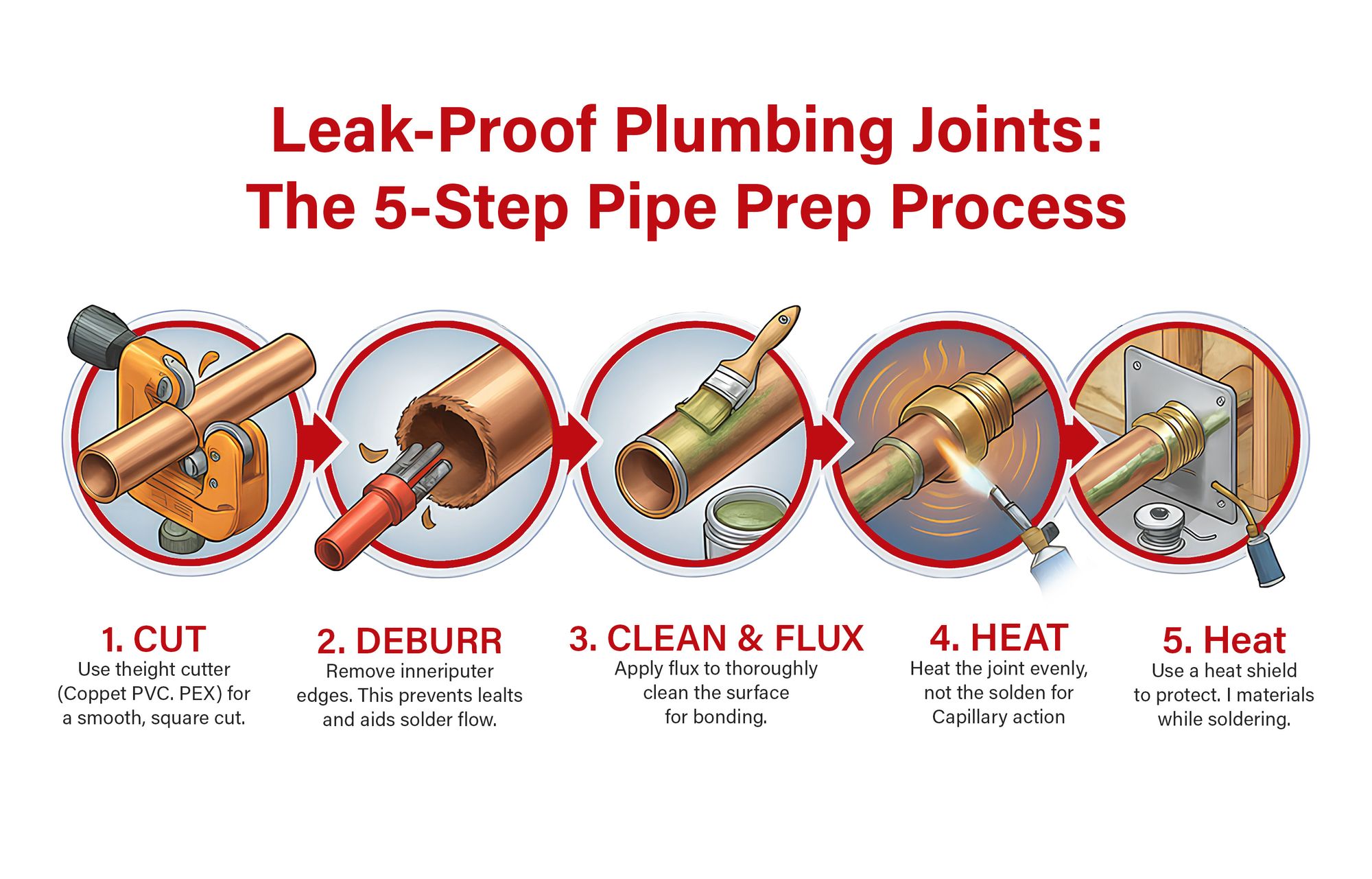
Accurate pipe cutting and proper joint preparation are essential for preventing leaks. Even a slight angle or rough edge can stop fittings from seating correctly, weaken solder bonds, and create gaps that fail under pressure. Plumbing experts rely on specialized cutting and prep tools because they produce clean, uniform surfaces that support long-lasting, watertight joints.
Pipe Cutters (Copper, PVC, PEX)
Pipe cutters create smooth, square cuts that help fittings align correctly and ensure strong seals.
When to use which type of Pipe Cutters?
- Copper pipe cutter: Best for copper tubing where soldered or compression joints require a precise cut.
- PVC cutter: A ratcheting model prevents cracks and delivers straight cuts on PVC and CPVC.
- PEX cutter: Ensures clean, straight cuts on flexible PEX for reliable crimp and expansion fittings.
How Clean Cuts Make plumbing jobs easier?
Tubing Reamer / Deburring Tool
Deburring removes sharp inner and outer edges left behind after cutting.
How deburring prevents water leaks:
- Smooth edges help fittings sit flush
- Copper solder flows more evenly around a clean edge
- Reduces interior turbulence caused by jagged pipe lips
Skipping this step is one of the most common causes of poor joint integrity.
Hacksaw
A hacksaw offers flexibility where pipe cutters cannot reach or when cutting through hardware.
The most common hacksaw uses:
- Cutting metal pipes in tight or awkward spaces
- Trimming brackets, bolts, and anchors
- Removing rusted screws or hardware during repairs
Torch Kit (Propane or MAPP Gas)
A torch kit is essential for heating copper pipes so solder can flow into joints and form a watertight seal.
Basics of soldering copper pipes:
- Clean pipe and fitting thoroughly
- Apply flux to prep the metal surface
- Heat the joint evenly - not the solder
- Allow solder to flow naturally around the seam
Safety precautions to take while soldering:
- Keep a fire extinguisher nearby
- Ventilate the workspace to avoid fumes
- Protect nearby materials with a heat shield pad
- Avoid heating near plastic components without shielding
Heat Shield Pad
A heat shield pad protects nearby surfaces while soldering, especially in finished areas.
Which surfaces do Heat Shield Pads protect?
- Wood framing
- Drywall
- Cabinets and trim
- Flooring materials
Using a heat shield reduces fire risk and makes soldering safer in tight or enclosed spaces.
Drain Cleaning Tools for Clogs & Slow Drains
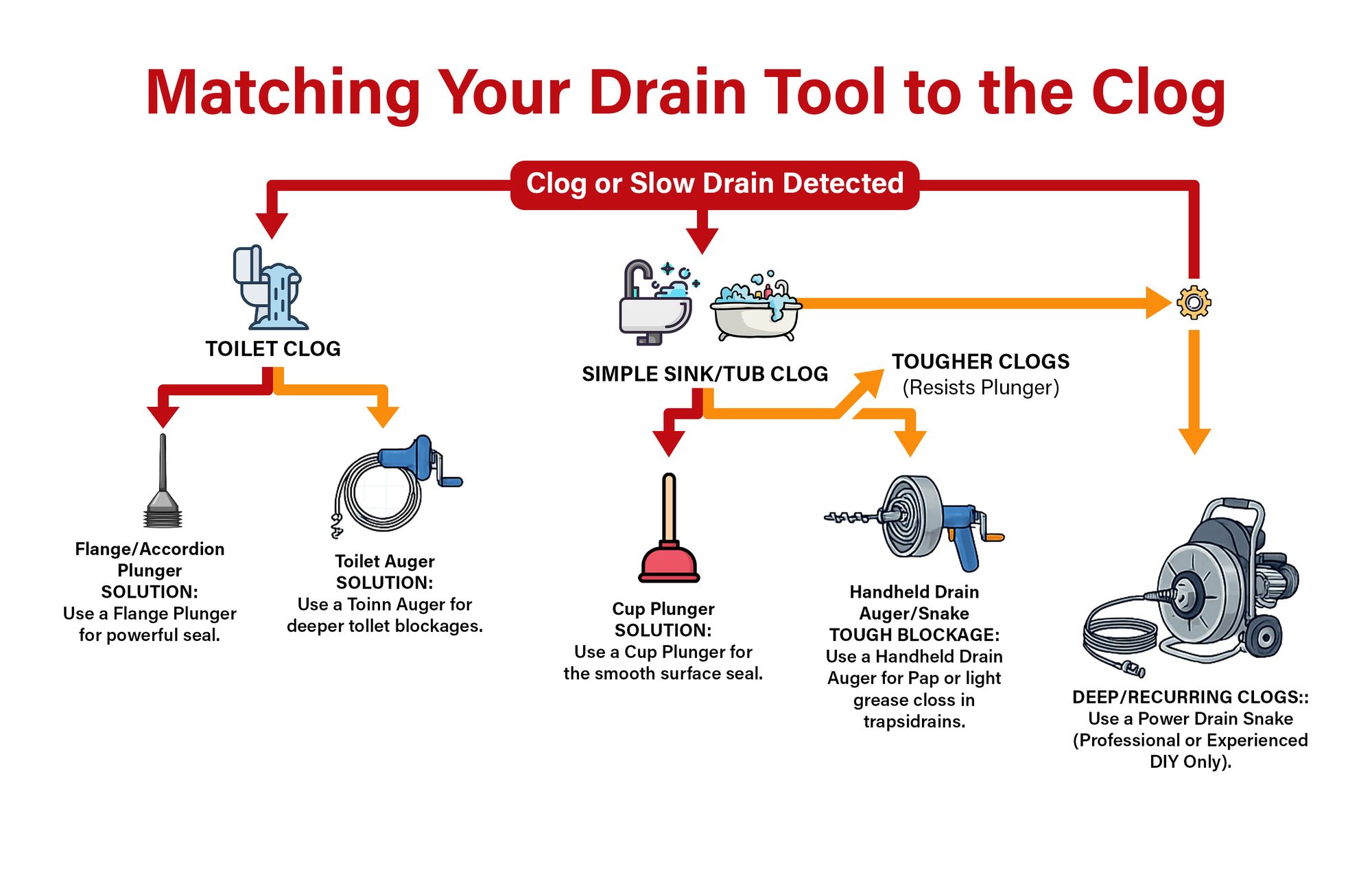
Drain issues are among the most common plumbing problems in homes. Having the right drain‑cleaning tools helps clear blockages safely without damaging fixtures or pipes. Each tool below serves a specific purpose, and choosing the right one prevents unnecessary strain on drains and reduces the risk of repeated clogs.
Toilet Plunger (Flange or Accordion)
A toilet plunger is designed with a specialized shape that creates a tight seal inside the toilet drain. This helps generate the pressure needed to dislodge clogs deeper in the trap.
Why is Plunger's shape important?
- Flange plungers have an extended rubber sleeve that fits securely into toilet openings.
- Accordion plungers offer stronger suction and work well for tougher toilet clogs.
Keep toilet plungers separate from other plungers to avoid cross‑contamination.
Cup Plunger
A cup plunger is the standard style many people recognize, but it’s not designed for toilets. It forms a flat seal that works best on smooth, even surfaces.
Where should you use a cup plunger?
Handheld Drain Auger
A handheld drain auger is a flexible cable tool that reaches into drains to break apart clogs that a plunger can’t clear.
Where can handheld Drain Auger’s be used?
- Slow or blocked bathroom sinks
- Shower drains filled with hair
- Light kitchen sink clogs
When a handheld drain auger works vs. when it doesn’t -
Power Drain Snake
A power drain snake uses a motorized cable to reach deeper into plumbing lines. It delivers consistent rotation and force, making it suitable for tougher or long‑running blockages.
Power Drain Snakes are best for:
- Grease‑heavy kitchen line clogs
- Long horizontal pipe runs
- Recurring blockages in older plumbing systems
Toilet Auger
A toilet auger is built specifically for toilets, with a curved guide tube and a rubber‑coated head to protect the porcelain surface.
Why plumbers rely on a Toilet Auger:
- Clears deeper toilet clogs without risking bowl scratches
- The protective head prevents scraping or chipping the toilet’s glaze
- Reaches past the toilet trap where most plungers can’t
Always feed the auger gently and crank slowly. Forcing the cable can kink it and may push the clog deeper into the waste line.
Diagnostic Tools Every Plumber Should Have
To be able detect the accurate plumbing issue without any guessing games or demolition - a set of diagnostic tools are a must-have for plumbers. Take a look at the ones that must be in your plumbing bag.To accurately diagnose plumbing issues without resorting to guesswork or demolition, plumbers require a specific set of diagnostic tools. Here is a look at the essential tools that should be included in your plumbing kit.
These tools allow plumbers to diagnose issues accurately and safely, reducing unnecessary repairs and preventing long-term damage.
Power Tools Used in Plumbing Jobs
Modern plumbing, a mix of skill and technology, requires power tools for professional efficiency. These tools are crucial for challenging tasks that demand superior cutting strength, high-precision drilling, and rapid material removal, which manual tools cannot achieve as effectively or quickly.
These power tools are not merely conveniences; they are integral to meeting the industry's demands for speed, accuracy, and adherence to stringent building codes. They enable the modern plumber to execute complex tasks with professional quality and efficiency.
Consumables Every Plumber Needs in Their Tool Bag
Consumables are materials that get used up during repairs and installations. Even though they’re small, they play a major role in preventing leaks, ensuring tight seals, and keeping fixtures secure. Using poor‑quality consumables often leads to repeat failures, loose joints, weeping leaks, foul odors, or fittings that loosen over time. Reliable materials help create long‑lasting seals and reduce callbacks.
- Teflon Tape (Thread Seal Tape): Used on threaded pipe connections for a watertight seal (e.g., shower arms, faucets, gas joints). Quality is key to prevent tearing, uneven application, and leaks.
- Plumber’s Putty: Creates flexible, watertight seals around fixtures (e.g., sink strainers, faucet bases). Low-grade options can dry out, crack, or shrink, leading to leaks.
- PVC Cement + Primer: Primer cleans and softens PVC pipe surfaces; cement permanently bonds them. Essential for PVC/CPVC plumbing and drainage. Weak bonding can lead to joint separation and difficult-to-repair leaks.
- Solder & Flux: Essential for copper pipe installations. Flux cleans the surface; solder melts to form a solid, watertight seal. Inferior materials can result in uneven flow or weakened bonds.
- Silicone Sealant: Waterproofs around plumbing fixtures (e.g., sinks, showers, exterior penetrations). Cheaper alternatives lose elasticity, allowing water penetration and potential mold/damage.
- O‑Ring / Gasket Assortment Kits: Create vital seals within faucets, valves, and traps, primarily for quick repair of drips. Poor quality leads to failure due to cracking, poor sealing under pressure, or improper sizing.
Safety Gear for Plumbing Work
Plumbing, especially without the right gear, is risky. You might end up with burns, nasty debris, harsh fumes, and just plain strain. It is absolutely essential that you choose the right plumbing gear for every plumbing job.
We've put together a quick table to make it super easy to see what you need and when you should use it.
If you pick the right safety gear and use it smartly, you'll seriously cut down on injuries and make those long, tough plumbing jobs much safer and way more manageable.
How to Pick the Best Plumbing Tools?
Picking out your plumbing tools with a little thought is a smart move. It means your tools will work better, you’ll make fewer screw-ups, and they’ll last way longer. The right materials and design make a huge difference in how safe, accurate, and durable your work will be. Here's a casual guide on what plumbers (and even us homeowners!) should look for when putting together a solid toolbox.
Don't Skimp on Material Quality
The metal your tool is made from really determines how well it performs.
Look for these tough materials:
- Chrome vanadium steel: Super strong and durable - perfect for wrenches and pliers.
- Forged steel: This is extra tough and resists wearing out.
- Heat-treated alloys: They’re specially hardened so they won’t bend or break under pressure.
Choosing tools made with these materials helps you keep a strong grip and means they won't warp or crack easily.
Grip and How It Feels in Your Hand (Ergonomics)
Comfort is a big deal, especially when you're on a long job, squeezed into a tight spot, or really need to twist something hard.
Key features you want:
- Handles with non-slip rubber grips.
- Contoured shapes that fit naturally in your hand.
- Tools that feel balanced to keep your wrist from getting tired.
Ergonomic tools mean you can be more precise and you won't strain yourself doing the same motion over and over.
Keep the Rust Away (Corrosion Resistance)
Plumbing tools are always getting wet, covered in metal bits, and exposed to chemicals. Coatings that fight rust and corrosion are essential for a long lifespan and consistent performance.
Recommended finishes for Corrosion-free fittings:
- Nickel-chrome plating
- Black oxide coating
- Rust-resistant alloys
Protecting your tools from corrosion stops them from getting pitted, worn down, and slippery.
Check the Warranty
A solid warranty basically says the manufacturer believes in their product.
Why does a good warranty matter?
- It protects you from defects right out of the factory.
- It gives you peace of mind about the tool's long-term reliability.
- It saves you money on replacing your most-used tools.
Try to find a lifetime warranty on basic hand tools and at least a strong multi-year one on anything powered.
Stick with Reliable Brands
Some companies just consistently make better, more durable tools than others.
Things to keep in mind when choosing a plumbing supply brand:
- Do they have a good reputation for quality and precision?
- Can you easily get replacement parts if something breaks?
- Do they offer decent customer support?
Using tools from trusted brands helps ensure you get consistent, good results on every project. DK Hardware lists the top global brands for you to have the best-quality plumbing tools installed!
Homeowner Tools vs. Pro Tools
Everyone has different needs. Picking the right type of tool prevents you from overpaying or getting something that's not up to the job.
Conclusion
The right tool is the difference between a quick, professional fix and a frustrating, leaky mistake. Whether you are a homeowner tackling your first clog or a seasoned professional overhauling a commercial system, investing in quality, purpose-built equipment pays dividends in safety, efficiency, and the longevity of your work.. For everything from basic wrench sets to professional diagnostic cameras and high-grade consumables, trust reliable sources to equip your next project. DK Hardware is dedicated to providing the high-quality, professional-grade plumbing tools and supplies that ensure your work - and your water systems - last.