




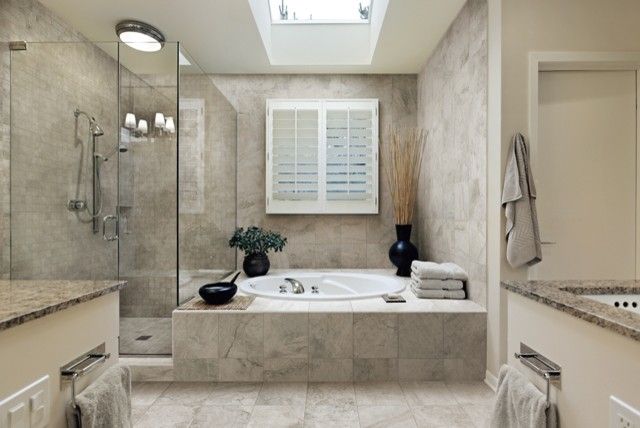
According to Remodeling.com’s latest data, a bathroom remodel retains 70% of its value when the home is sold. Of course, the primary value of upgrading or remodeling your bathroom is the pleasure you and your family experience.
Here’s the thing: remodeling any room of your house, and especially a bathroom, can easily change from a dream project into a nightmare.
Follow this roadmap to ensure your bathroom remodeling goes as smoothly as possible.
Step 1: Make a plan
Well before you make your first phone call, assess your goals. Maybe you want that Roman tub you remember from your newlywed suite? Or you’re just dying to update the pepto-pink and mint-green tile someone thought was really cool in the mid-fifties?
Your goals may include any or all of the following:
- update colors
- new flooring
- new tile
- plumbing improvements
- replace plumbing fixtures
- upgrade hardware
- change color scheme
- add or remove windows
- changes in ventilation
At this stage in the process, dream big. Don’t worry overmuch about anything except what you (and of course your significant other!) want in your dream bathroom.
Step 2: Establish your budget
If you don’t have a bathroom remodeling budget in mind, it’s too easy to let scope creep and contractor upsells get out of control.
Once you start the remodeling process, your budget will be your most important tool, so spend as much time on this as you need. Stay aware of any other home improvements you’re planning (DK Hardware’s consultants recommend taking your home improvements one by one).
Step 3: Revise your “dream list”
With your budget in mind, go back to your list of goals with a red pen in hand. Can you really afford Carrara tile, or will a porcelain substitute suffice? Can you afford both frameless shower doors and new flooring?
Your goal is to strike a balance between your budget and your dreams without doing too much damage to either one.
Note: in the event your dreams far exceed your budget, you can take one of two approaches:
Concentrate on the essential (and dream big another time)
Choose an incremental approach, focusing on the basic elements that you can build on as time goes on
Should you choose one of these slower approaches intsead of an all-at-once remodel, just remember that you’ll be using your bathroom in the meantime. Don’t leave yourself using a hybrid you hate day after day!
Step 4: Vendor interview
Ask your friends whether they can recommend anyone who’s done good work for them in the past.
Depending on your area, contracting may be quite seasonal. Be sure to ask when their peak times are. Not only will your project be more likely to come in on time if your vendor isn’t slammed with other work, you may even save money by scheduling your project during their slow season.
Step 5: Collect quotes
Set up appointments with at least three vendors to visit your home and discuss your project. Make absolutely certain to ask the following questions:
– will you please itemize your bid?


This enables you to make line-item deletions or modifications to the quote, and makes comparing competing quotes much easier.
– is this an estimate, or a fixed price?
This can be hard to pin down — because contractors know, from experience, how jobs sometimes spiral out of control. Always request a fixed-price bid. In the event there are too many uncertainties, try to negotiate very precise specifications for the task. That way, if the unexpected happens and the project changes, the contractor can prepare a change order outlining the new requirements, for the additional work.
– can you provide references?
Your contractor should be able to provide a minimum of three references in your town who are happy with the work completed on a similar project. If the contractor is unwilling or unable to provide references, than them and move on.
In addition to references, check with your local Better Business Bureau to confirm your contractor is a member in good standing (or at the very least doesn’t have a bunch of unresolved complaints).
– ask to meet the foreman at a working project
The foreman in charge of your remodeling will be the project manager, the person whose responsibility to keep everything running smoothly, on time and on-budget.
Also, by asking to meet your foreman, you’ll be encouraging your contractor to assign one of his/her best people to your job.
Step 6: Review your contract
When you’ve selected your contractor, review your contract. Make sure it includes the following:
- deposit (and deposit refund policy)
- payment schedule
- start date
- end date
- penalties for late payment or project duration overrun
- any modifications to scope of work or price must be verified in writing by both you and your contractor
For large-scale, expensive projects, we strongly recommend hiring a lawyer to review or draft your remodeling contract.
Step 7: Mark your calendar!
Make certain you know when to expect work to begin. Having a bathroom under renovation may create stress and disrupt your household, so advise everyone you share your home with of the project’s start and end dates.
We sincerely hope this information has been useful to you (and not too intimidating). We appreciate your feedback — leave any questions or clarifications in the comments below.
Also Read : Glass Cutting Tools: How to Choose the Best Tool for Your Project?