What Are Deal Trays and Where Are They Used?

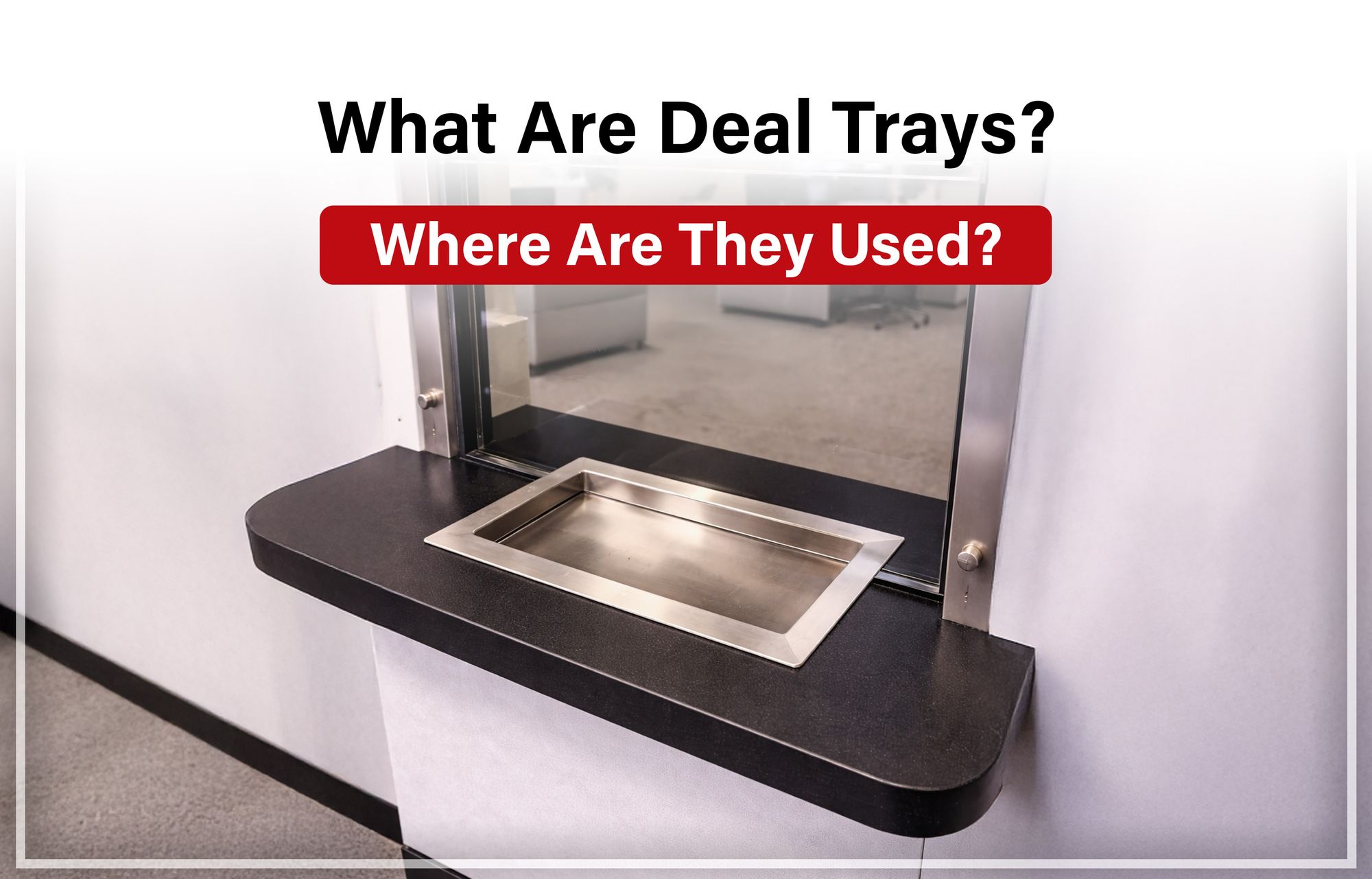
If you’ve ever stood at a bank counter, ticket booth, or government service desk, chances are you’ve already used a deal tray, even if you didn’t realize it at the time.
It’s that small tray built into the counter that lets cash, documents, or receipts slide from one side to the other. Simple? Yes. Optional? Not really.
Deal trays play a quiet but important role in security, efficiency, and everyday operations across banks, offices, healthcare facilities, and other high-traffic service counters. Let’s break down what they are, why they’re used, and where they’re most commonly installed.
What is a Deal Tray?
A deal tray is a counter-mounted or recessed tray designed to pass items across a service counter - especially when there’s a physical barrier, counter height difference, or security glass involved. Instead of handing items over the counter or opening a window, deal trays allow a controlled, one-at-a-time exchange.
They’re commonly used to pass:
- Cash and coins
- Documents and forms
- IDs and licenses
- Tickets and receipts
- Small packages or envelopes
Most deal trays are made from durable materials like stainless steel or aluminum, so they can handle constant daily use without wearing down.
Why Are Deal Trays Used at Transaction Counters?
Deal trays offer more than just convenience. They’re often installed in various buildings, offices and institutions for very practical reasons.
The right deal tray help with:
- Better security: Limits direct contact during transactions
- Safer cash handling: Reduces risk in high-cash environments
- Controlled exchanges: Items are passed clearly, one at a time
- Faster transactions: No need to open barriers or doors
- Compliance needs: Often required in regulated or secure spaces
In short, deal trays make transaction counters safer, cleaner, and more efficient, for both staff and customers.
Where Are Deal Trays Commonly Used?
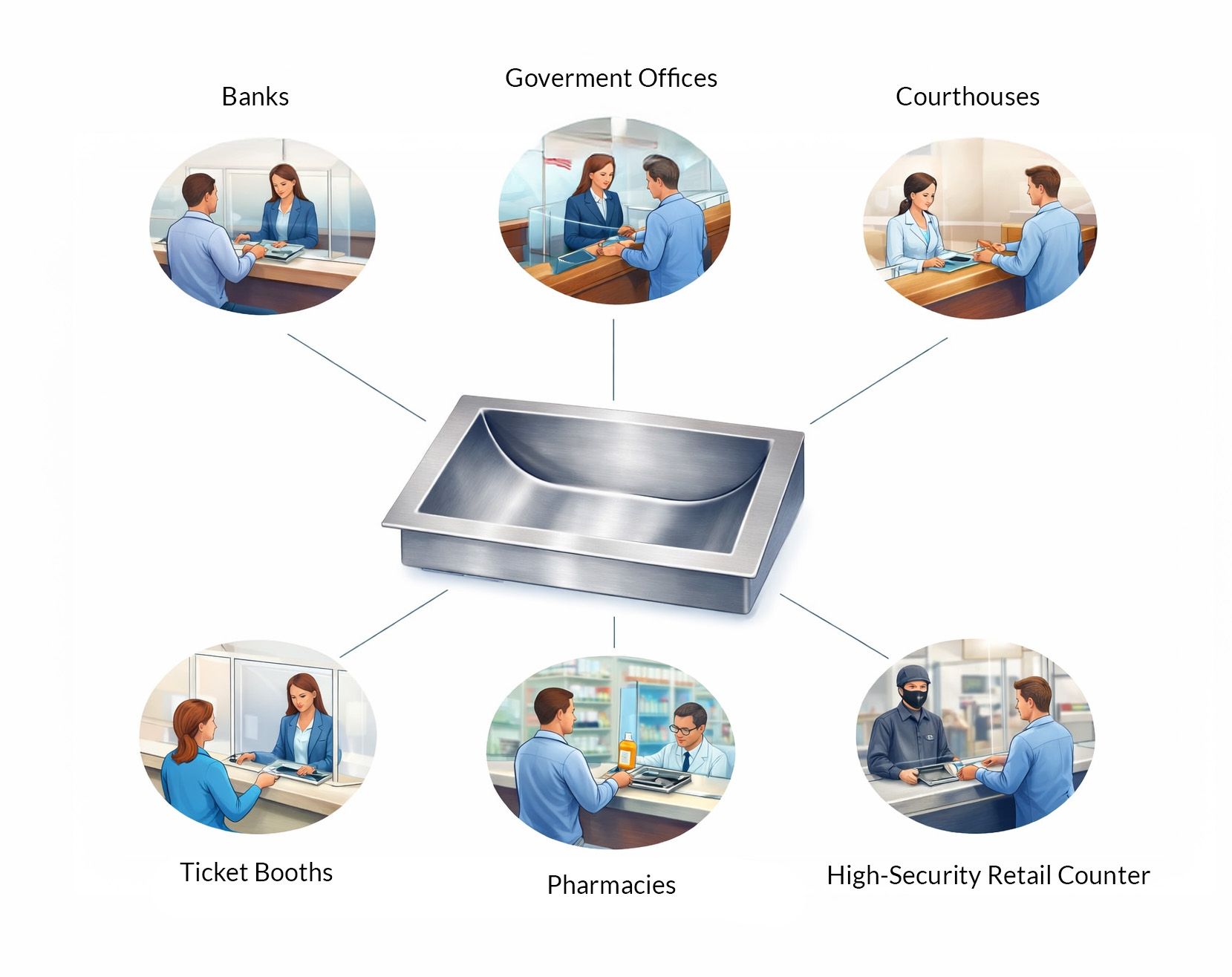
Deal trays are used anywhere items need to be exchanged across a counter in a controlled, repeatable, and secure way. While they’re small components, their placement is usually intentional, tied closely to safety, workflow, and the nature of the transaction.
Below is a closer look at the most common environments where deal trays are installed, along with why they matter in each setting.
Banks and Financial Institutions
Banks are one of the most common places where deal trays are used. Teller counters handle cash, checks, deposit slips, and sensitive documents all day long, often with a physical barrier like transaction windows between staff and customers.
Deal trays help banks:
- Transfer cash and documents without direct hand-to-hand contact
- Maintain separation at teller counters and drive-through lanes
- Reduce errors by allowing one-item-at-a-time exchanges
- Support safer cash-handling practices for staff
You’ll typically find deal trays at teller counters, drive-through banking windows, and other secure transaction points.
Government Offices and Public Service Counters
Government offices deal with high visitor volume and a wide range of transactions - payments, applications, permits, and document verification - making deal trays and transaction drawers an important part of government building’s infrastructure.
In government offices & public service counters, deal trays:
- Keep paperwork organized during busy service hours
- Help manage payments and documents at public-facing counters
- Reduce unnecessary physical contact between staff and visitors
- Support orderly, controlled service in crowded offices
Common examples include licensing offices, tax payment counters, municipal service desks, and public records departments.
Courthouses and Law Enforcement Buildings
Security and access control are critical in courthouses and law enforcement facilities. Deal trays allow approved items to be exchanged without compromising security protocols.
They’re commonly used to:
- Pass forms, records, or documentation at public service windows
- Support controlled interactions at secure counters
- Maintain physical separation in restricted-access areas
In courts and law enforcement buildings, deal trays are part of a broader security-first counter design.
Ticket Booths and Toll Booths
Ticket windows and toll booths are designed for speed. Transactions need to be fast, repetitive, and consistent, especially during peak hours.
Deal trays help by:
- Allowing quick transfer of tickets, cash, and receipts
- Reducing delays caused by opening windows or doors
- Supporting smooth flow in high-traffic public areas
They’re commonly installed at cinema and event ticket booths, transit counters, parking structures, and toll booths.
Hospitals, Clinics, and Pharmacies
Healthcare facilities need to balance efficiency with privacy, hygiene, and patient safety. Deal trays support this by creating a controlled point of exchange.
Typical uses include:
- Prescription handover at pharmacy counters
- Payment and billing transactions
- Reception desks where documents or IDs are exchanged
By limiting direct contact, deal trays help maintain cleaner, more organized service counters in healthcare environments.
Cash-Handling and High-Security Businesses
Businesses that handle cash or valuable items rely on deal trays as part of their security setup.
They’re commonly used in:
- Jewelry stores
- Pawn shops
- Currency exchange counters
- Check-cashing centers
Deal trays help control transactions, reduce risk, and create a clear boundary between staff and customers.
Common Types of Deal Trays
Not all deal trays are the same. The right type depends on how the counter is designed and how the tray will be used.
How to Choose the Right Deal Tray?
While choosing a deal tray for your business sounds easy, a few careful considerations before buying one will give you a secure, convenient, and aesthetic deal tray and transaction counter.
Here’s what to keep in mind when choosing a deal tray:
- What’s being passed: Cash only, documents, or small items
- Counter design: Surface-mounted or recessed installation
- Security level: Open counters vs enclosed or glass-protected
- Usage volume: Occasional use or constant daily traffic
- Environment: Indoor counters vs drive-through or outdoor use
Matching the tray to its environment helps prevent issues later.
Final Thoughts
Deal trays may be small, but they’re a key part of many transaction counters. From banks and government offices to healthcare facilities and ticket booths, they help keep everyday exchanges safe, efficient, and organized.
If you’re planning or upgrading a service counter, a deal tray shouldn’t be an afterthought. When chosen correctly, it becomes one of those components that simply works, day after day.
Explore a huge range of deal trays and other service windows and doors hardware on DK Hardware that helps you build infrastructure that looks good and lasts long!