Door Closer Size Chart & Guide - ADA & Fire Safety Guidelines Explained

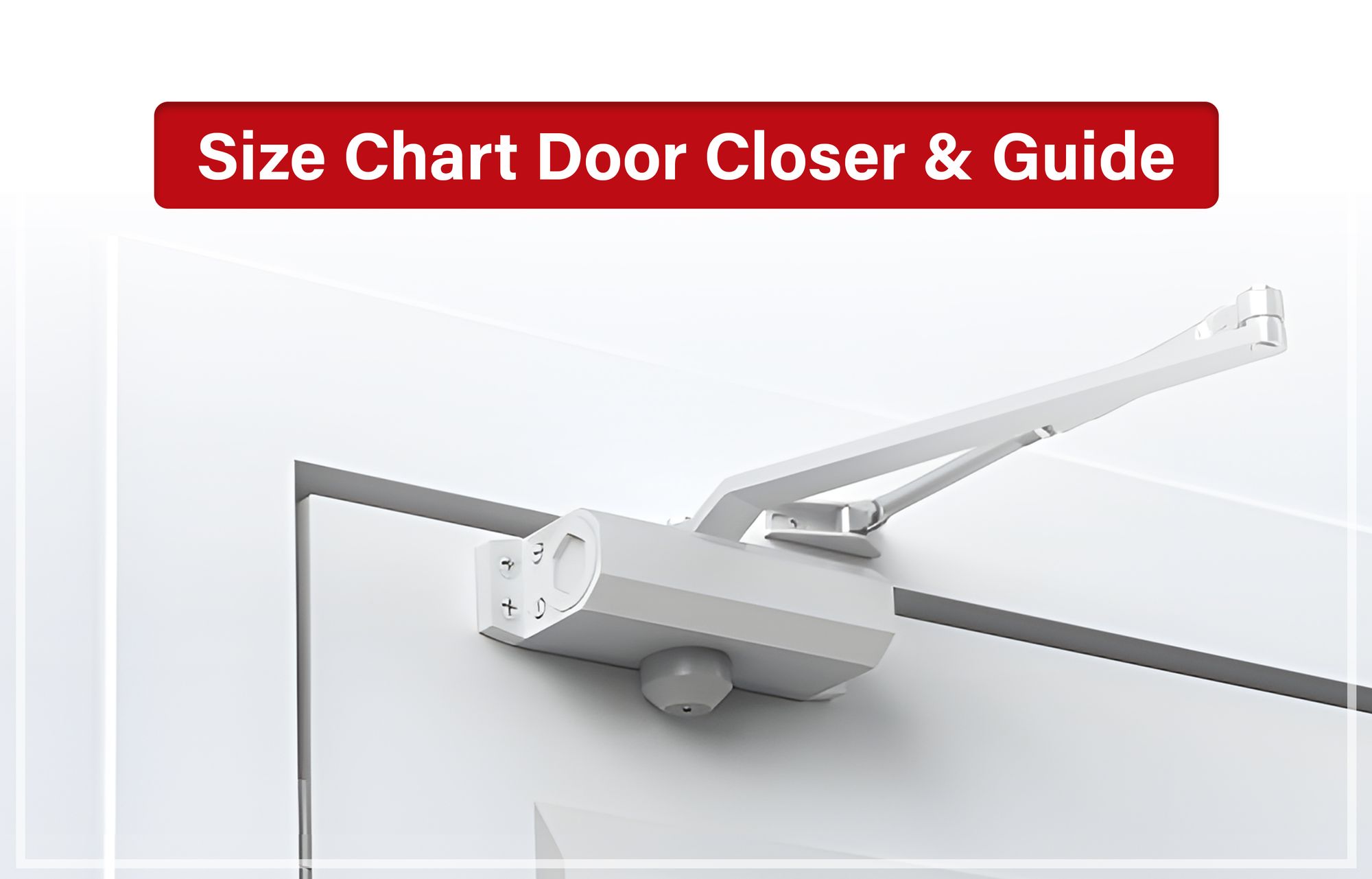
When it comes to door hardware, one detail that often gets overlooked is the size of a door closer. Unlike body dimensions or mounting styles, ‘size’ refers to the spring strength inside the closer. Getting this sizing right is critical. It the door closer is too weak, the door won’t shut securely, and if’ it’s too strong, it becomes difficult to open, potentially violating accessibility codes
What makes sizing important is that it affects function, safety, and code compliance. For example, fire-rated doors require a minimum closer strength to guarantee proper latching during emergencies. On the other hand, accessibility standards such as ADA limit how much force can be required to open a door. The right balance allows a door to close every time without creating barriers for everyday users.
This guide brings together the industry standards, a practical size chart, and real-world examples. It is designed to help professionals and homeowners alike understand how door closer sizes work, where each size is typically used, and the compliance rules tied to them.
What Does Door Closer Size Mean?
When you see a door closer labeled as Size 2, Size 4, or Size 6, it doesn’t describe the length or body dimensions of the device. Instead, it indicates the spring strength inside the mechanism. This spring power determines how much force the closer applies to shut the door.
- Size = Power: Higher numbers mean stronger springs and greater closing force.
- Most commercial door closers are physically similar in length (often around 10 inches), regardless of their rating.
- Adjustable options: Many modern closers allow adjustment within a size range (e.g., 1–4 or 3–6), giving flexibility for different doors.
Why does this matter?
- Undersized closers may fail to latch a door completely, especially on heavy or wide doors. This creates safety risks and can violate fire door requirements.
- Oversized closers can make doors uncomfortably heavy to open. In commercial spaces, this can lead to non-compliance with ADA accessibility standards, which limit the maximum opening force.
In practice, the closer size you need depends on the door’s width, weight, and application. A 30-inch lightweight office door might only need a Size 2 or 3 closer, while a 48-inch exterior steel door could require a Size 5 or 6. Choosing the right size ensures the door closes reliably while remaining easy to use.
Standard Door Closer Size Chart
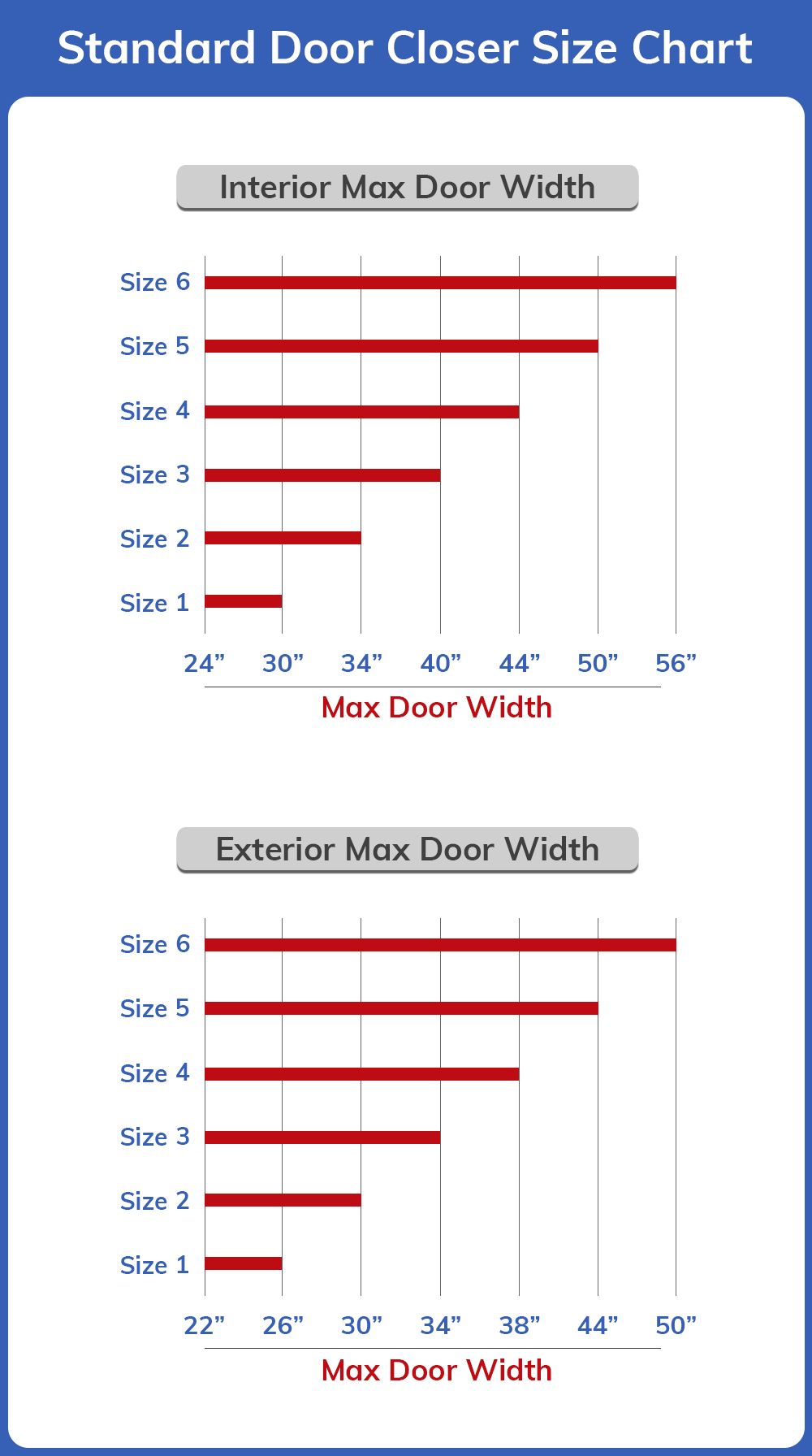
Door closer sizes are standardized so that installers and building managers can match the closer to the door’s dimensions and use. Below is a quick-reference chart showing the general relationship between closer size, door width, and weight. These values may vary slightly by manufacturer, but they provide a reliable benchmark.
Points to Note:
- Interior vs exterior: Exterior doors typically require more closing force than interior doors of the same size because of wind, air pressure, and weatherstripping resistance.
- Minimum for fire doors: Fire-rated doors must use at least a Size 3 closer to ensure reliable closing and latching.
- Residential vs commercial: Light residential doors often fall under Size 1–2, while most commercial applications range from Size 3–5. Institutional or specialty settings may require Size 6 or above.
This chart serves as a practical baseline, but it’s always best to confirm with the specific product’s technical data before final installation.
Fixed vs Adjustable Door Closer Sizes
Door closers come in various types - two broad categories are fixed & adjustable. The former one comes with a fixed spring size, while latter ones allow you to adjust the spring strength within a range.
Fixed-Size Door Closers
- Set to one specific size (e.g., Size 3 only).
- Less common in modern commercial use but still seen in older or budget models.
- If the closer is mismatched to the door, it cannot be tuned - too weak and the door won’t latch, too strong and it becomes difficult to open.
Adjustable (Multi-Size) Door Closers
- Can be adjusted to cover a range (e.g., Size 1–4 or Size 3–6).
- Offer flexibility for different door weights and widths.
- Easier to fine-tune during installation to meet ADA accessibility or fire safety requirements.
Why Adjustable Is Preferred
- Flexibility: One closer can serve multiple door types.
- Compliance: Can be tuned to balance ADA force limits with fire door reliability.
- Cost-effective: Reduces need to stock multiple fixed-size models.
In today’s market, most Grade 1 and Grade 2 closers are adjustable, making them the go-to choice for professional installations. Fixed-size closers are now largely limited to specific residential or low-demand applications.
ADA & Fire Safety Considerations in Door Closer Sizing
While door closer sizing is extremely important for the door to function properly, you must also be careful about choosing the right door closer size as it’s tied to compliance with accessibility and fire safety codes.
Door Closer Sizes: ADA Accessibility Requirements
- Interior doors: Must not require more than 5 pounds of force to open.
- Exterior doors: Many local codes set the limit at 8.5 pounds.
- Risk of oversizing: A closer with too strong a spring can push the required opening force above these limits, creating barriers for users and leading to non-compliance.
Adjustable closers are valuable here because they allow installers to reduce spring tension while still ensuring the door closes properly.
Door Closer Size Requirement For Fire-Rated Door
- Minimum closer size: Fire doors must use at least a Size 3 closer to guarantee reliable self-closing and latching during emergencies.
- Certification: The door closer must be UL-listed and compliant with NFPA 80 standards for use on fire-rated assemblies.
- No manual hold-opens: Fire-rated doors cannot use wedge stops or hold-open arms unless connected to the building’s fire alarm system.
Fire doors must always close and latch - selecting the correct size and certified door closer is essential for life safety and building code compliance.
Together, ADA and fire safety requirements highlight why closer sizing is more than just a technical detail. It directly impacts accessibility, legal compliance, and occupant safety.
Which Door Closer Size to Use For Which Door?
The right closer size depends heavily on the type of door and where it is installed. Different environments place different demands on the closer.
Commercial Doors
- Exterior entry doors: Typically need Size 4–5 closers to overcome air pressure, weatherstripping, and heavy use.
- Interior office or classroom doors: Commonly use Size 3 closers, which provide enough force for reliable latching without exceeding ADA limits.
Residential Doors
- Storm or security doors: Often use pneumatic closers. For heavy storm doors, two closers (top and bottom) may be installed for smoother operation.
- Garage entry doors: Usually fire-rated and require a minimum Size 3 closer to meet code.
Specialty Doors
- Glass storefronts: Often use overhead or floor closers, typically adjustable within Size 3–5, depending on door width and conditions.
- Oversized institutional doors: May require Size 6 or higher for reliable performance.
Which Size Do You Need?
The following table provides a simple overview of common scenarios:
This breakdown offers a fast way to match door types to closer sizes, but installers should always verify against manufacturer specifications and local code requirements.
Common Mistakes To Avoid While Choosing Door Closer Sizes
Even experienced installers sometimes make errors when it comes to sizing. Avoiding these mistakes ensures doors remain safe, compliant, and easy to use.
- Confusing body size with spring size: Many assume a physically larger closer body means a stronger spring. In reality, most closers share similar dimensions regardless of their power rating.
- Installing Size 1–2 on a fire-rated door: Fire-rated doors need at least a Size 3 closer. Using anything smaller risks non-compliance and can prevent the door from latching during an emergency.
- Overpowering the door: Setting a door closer too strong makes it difficult to open, often exceeding ADA force limits. This not only frustrates users but can create accessibility violations.
By keeping these pitfalls in mind, building owners and contractors can avoid costly corrections and ensure every door operates smoothly and compliantly.
Shop Door Closers at DK Hardware
At DK Hardware, you’ll find one of the largest online selections of Door Closers & Accessories to suit every application - from light residential doors to heavy-duty institutional entrances. All our products are sourced from trusted manufacturers and meet the latest industry standards.
We support both professionals and homeowners by offering:
- A wide range of ANSI/BHMA-rated closers, including adjustable multi-size models.
- Fast shipping across the U.S. and Canada to keep projects on schedule.
- Bulk buying discounts that help contractors, facility managers, and resellers save on large orders.
Need more hardware solutions for your project? Explore our full range of Door Hardware including hinges, locks, and handles to complete your installation. Whether you’re upgrading a single door or managing a large-scale commercial project, DK Hardware makes it easy to source the right products quickly, reliably, and at a competitive price.