Hurricane Preparedness Checklist 2025: Stock Up the Right Hardware & Supplies For a Safe Hurricane Season

When a hurricane is in the forecast, most people rush to buy water, batteries, and canned food. However, securing your home’s structure is just as important. Strong winds and flying debris can turn a loose shutter or a cracked seal into a major entry point for water damage.
Once a hurricane warning is issued, it may be too late to fix what matters. Hardware stores often run out of essentials - storm shutter fasteners, weather seals, tarps, or even flashlights - within hours of an alert. Your house must be well-equipped to stay firm and unshakable in a big storm.
Investing in durable hardware ahead of time also saves money. Replacing roof sealant or adding storm shutter mounts now costs far less than paying for later post-storm repairs or water remediation.
Building your prep list around practical tools, reinforcements, and protective hardware is a smart, proactive step if you're in a hurricane-prone area. Stocking up early ensures you’re not depending on last-minute supply runs when the aisles are empty and time is short.
Let’s dive into the blog & find out what exactly you need to prepare yourself and your house for hurricane season.
Backup Power and Lighting Prep For Hurricane Season
Power outages often begin before the storm hits and last several days afterwards. Your prep plan should include reliable sources of light and backup energy.
Power And Lighting Must-Haves:
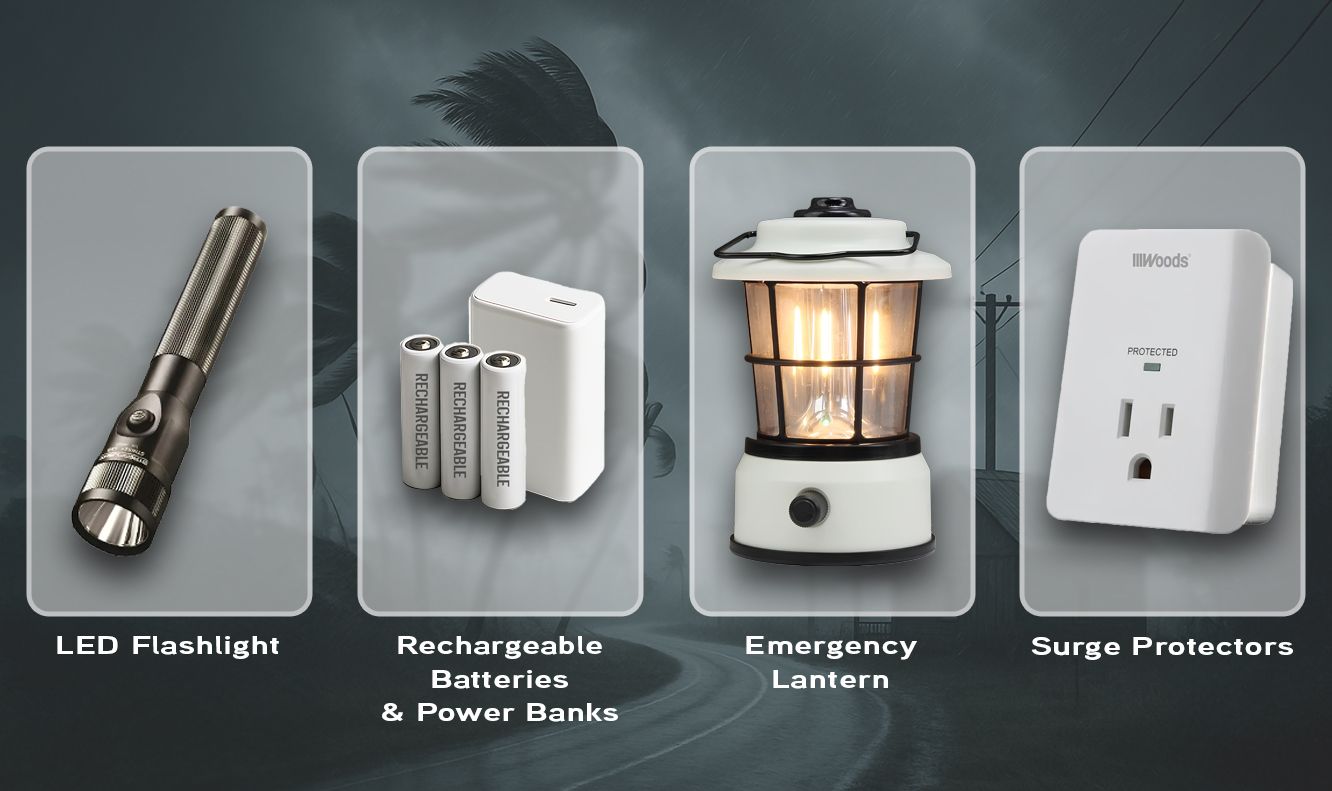
- LED Flashlights: Choose models with high lumen output and water-resistant construction. Keep at least one per person.
- Headlamps: Hands-free lighting is crucial during repairs or when navigating dark hallways or basements.
- Portable Generators: Keep essential appliances or medical devices running. Be sure to store fuel in certified containers and only use generators outdoors.
- Rechargeable LED Work Lights: Provide hours of illumination and often include USB ports for charging devices.
- Surge Protectors & Extension Cords: Prevent electronics from shorting when power returns suddenly.
Emergency Power and Communication Gear:
Power is often one of the first things to fail during a hurricane. Even a short blackout can leave you without ways to call for help, monitor weather alerts, or charge your phone. That’s why having portable power solutions is non-negotiable.
- Battery Banks: Look for high-capacity (10,000+ mAh) options that can charge phones multiple times.
- Solar Chargers: A reliable backup when electricity is out for extended periods, especially in sunny areas after the storm.
- NOAA-Enabled Emergency Radios: Hand-crank or battery-operated radios that provide real-time weather updates when cell service fails.
Choose lighting and power products designed for storm conditions, preferably water-resistant and easy to operate in the dark.
Hurricane Prep: List of Items to Secure Windows and Doors
Windows and doors are among the most vulnerable entry points during a hurricane. Even a small opening can allow water or air pressure to compromise the structure when strong winds or flying debris strike. That’s why reinforcing these areas should be one of the first upgrades on your hurricane prep checklist.
Window Protection Must-Haves
For windows, the ideal protection is permanent storm shutters, either roll-down, accordion, or panel types. These are built to withstand impact and can be deployed quickly. Pre-cut plywood panels are the next best alternative if shutters aren't feasible. They must be appropriately sized, drilled, and secured using corrosion-resistant anchor fasteners.
- Storm Shutters: Metal or polycarbonate panels offer better durability than wood.
- Plywood Panels: Should be at least 5/8" thick and fastened using proper anchors.
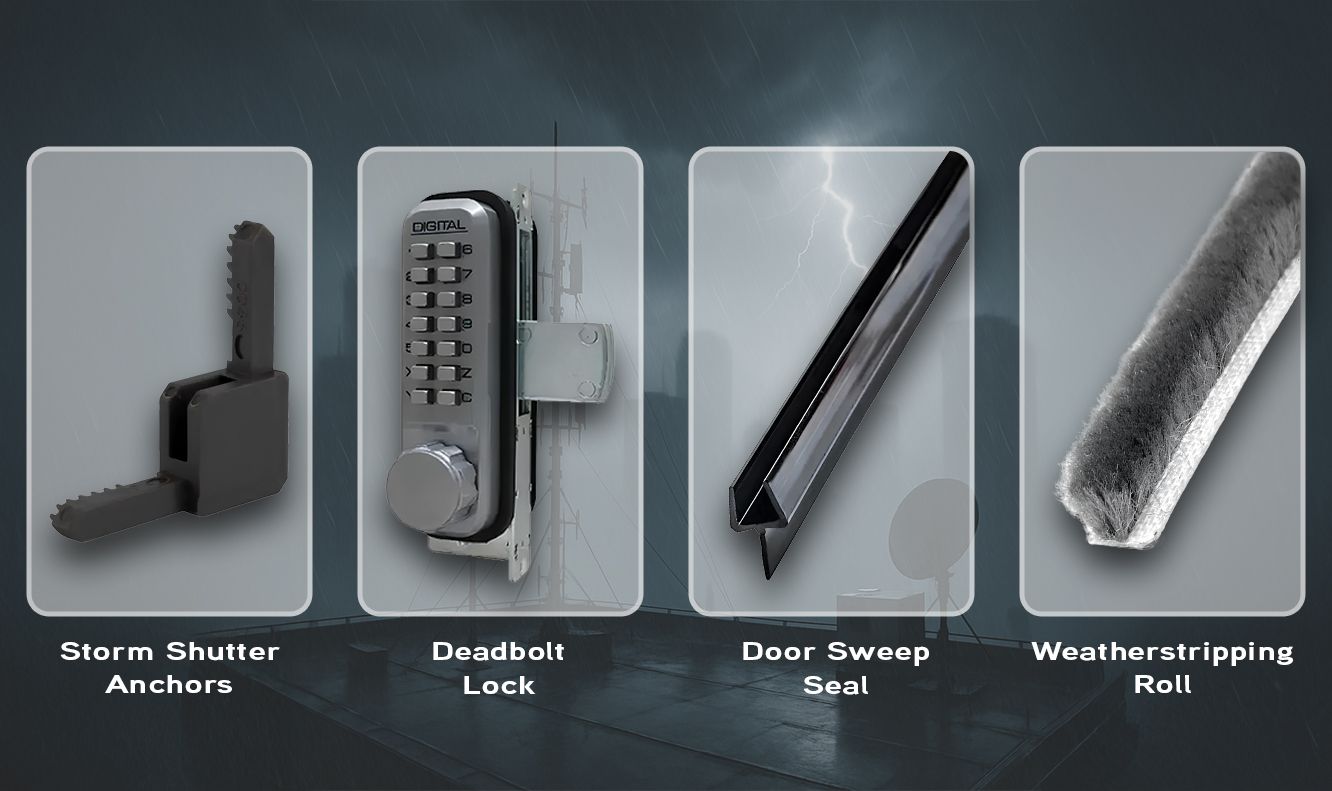
- Shutter Fasteners and Anchors: Use stainless steel or galvanized hardware to prevent rust during heavy rain.
Strengthen Doors To Make Them Cyclone-Resistant
Doors also require structural attention, especially entry and garage doors. A standard deadbolt won’t hold up if the doorframe gives way. Reinforcing the entire frame, installing long screws in hinges, and adding jamb brackets can improve impact resistance.
- Impact-Rated Deadbolts: These extend deeper into the frame and resist forced entry.
- Door Jamb Reinforcement Kits: Designed to distribute force more evenly during high winds.
- Heavy-Duty Strike Plates and Screws: Small upgrades that make a big difference under pressure.
Waterproofing Essentials For Hurricane Season:
Finally, sealing the gaps around your windows and doors is critical for water intrusion prevention. Wind-driven rain can seep through tiny cracks, causing damage to flooring, insulation, and electrical systems.
- Weatherstripping Tape or Gaskets: Seal around doors and windows to block drafts and moisture.
- Door Sweeps: Installed along the bottom edge of doors to keep water and debris out.
- Threshold Seals: Provide a tighter seal where doors meet the floor.
By taking time to fortify your windows and doors with proper hardware, you’re not just protecting against broken glass - you’re safeguarding your home’s structural integrity and reducing the risk of costly post-storm repairs.
Protect Your Home’s Exterior In Case of a Storm
When preparing your home for a hurricane, it’s easy to overlook exterior elements like garage doors, fences, sheds, and roofing details. But these areas often take the first hit from high winds and flying debris. A weak link here can result in roof lift, flooding, or extensive structural damage.
Key Upgrades for Garage Protection
Garage doors are especially prone to failure under wind pressure. If the door blows in, it can create a suction effect that lifts the roof off. Reinforcing the garage is one of the most effective ways to improve your home’s wind resistance.
- Bracing Kits: Install vertical reinforcement bars to keep the door from bowing or collapsing inward.
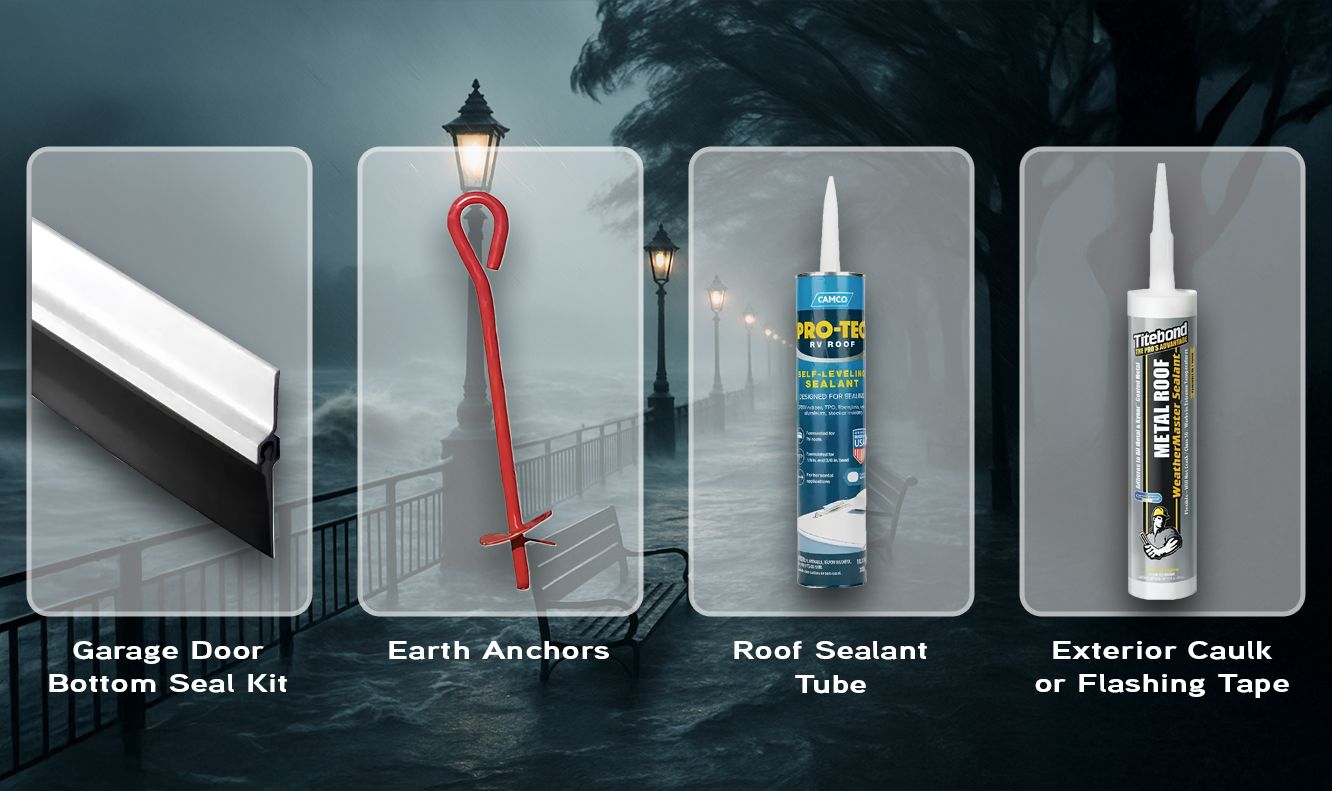
- Heavy-Duty Bottom Seals: Help block water, dust, and wind from entering at the base of the door.
- Side and Top Weatherstripping: Seals the perimeter and keeps out driven rain.
Secure Your Surroundings
Beyond the garage, any loose or lightweight item outdoors can become a projectile in hurricane-force winds. This includes patio furniture, garden tools, potted plants, fences, and storage sheds.
- Anchor Kits for Sheds and Furniture: Use galvanized or stainless steel anchors to secure items to the ground.
- Fence Post Reinforcement: Tighten or replace rusted fasteners on wooden or metal fences.
- Deck Tie-Downs and Brackets: Minimize lift and sway in elevated outdoor structures.
Roof And Trim Protection Tips
Your roof’s edges and seams are also vulnerable. Rain and wind can exploit weak points in flashing, vents, or joints, leading to leaks or shingle loss. Preventive sealing can save you from major repairs after the storm.
- Inspect Flashing Around Vents and Skylights: Look for lifted edges or cracked sealant.
- Apply Roofing Tape or Sealant: Seal vulnerable joints, nail heads, or shingle cracks.
- Use Exterior-Grade Caulk: Especially around soffits, eaves, and fascia boards.
Reinforcing exterior structures doesn’t require major renovation - just smart upgrades using the proper hardware. Taking action now means fewer surprises when the winds start picking up.
Flood Protection and Water Damage Prevention
Water intrusion is one of the most common and costly effects of hurricanes. Even homes far from the coast can experience heavy rainfall, pooling water, or basement flooding. Securing low-entry points and creating physical barriers can make a significant difference.
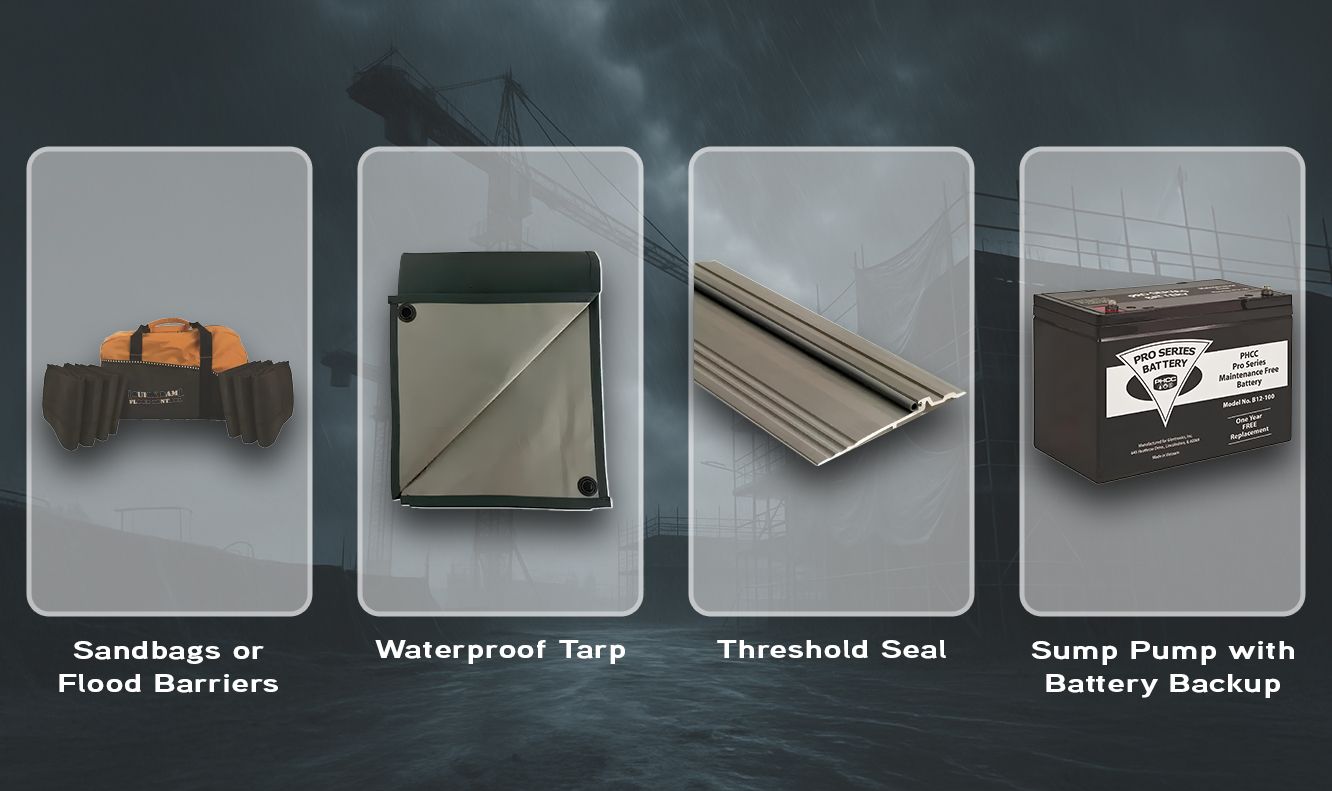
Key Flood Protection Products:
- Sandbags: Place them at entry doors, garage thresholds, and basement windows to divert water.
- Inflatable Flood Barriers: They offer reusable, flexible water redirection.
- Tarps and Plastic Sheeting: Cover damaged roofs, broken windows, or exposed belongings.
Water Intrusion Prevention Tips:
Sealing and waterproofing are just as critical. Gaps in door frames, old sealant around windows, or low-lying thresholds can let in water without visible damage.
- Sump Pump with Battery Backup: Useful for flood-prone basements where water can pool.
- Waterproof Sealants or Exterior Caulking: Apply to cracks or vulnerable wall seams.
Post-Storm Recovery Tools
Cleanup is a major part of hurricane response. Having the right tools on hand lets you take quick action to remove debris, make temporary repairs, or safely access blocked areas.
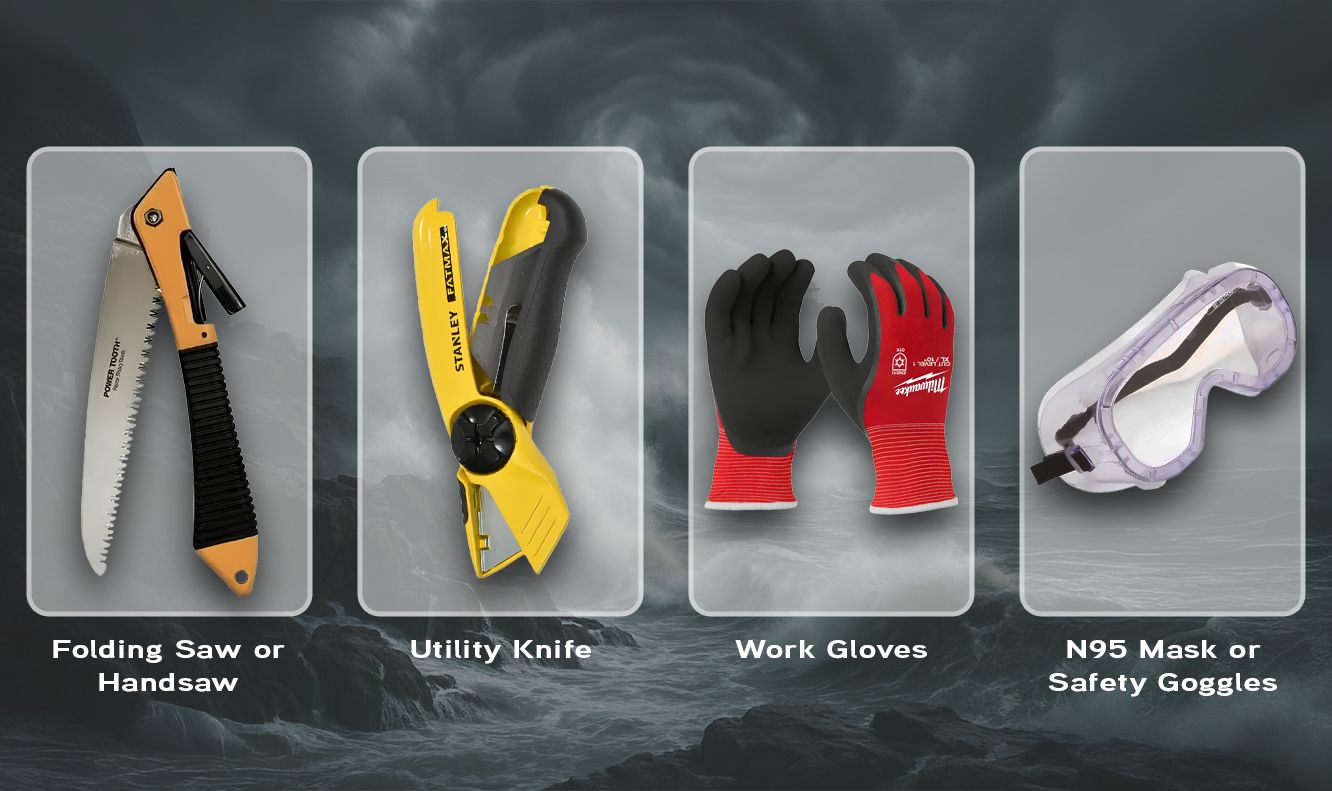
Essential Storm Recovery Tools
- Crowbar or Pry Bar: To lift fallen boards, jammed doors, or structural debris.
- Folding Saw and Shovel: For clearing branches or mud after flooding.
- Utility Knife: Versatile for tarp cutting, cord removal, or minor repairs.
Cleanup and Safety Gear:
- Heavy-Duty Work Gloves and Goggles: Protect hands and eyes during debris removal.
- Trash Bags: Industrial-strength bags are helpful for wet or sharp materials.
- Mold & Dust Protection: Use N95 masks and non-slip boots when re-entering damp areas.
Family, Pets & Document Safety
Emergencies affect every member of the household - including pets. Preparing for their needs, along with safeguarding your essential records, ensures a smoother recovery if evacuation becomes necessary.
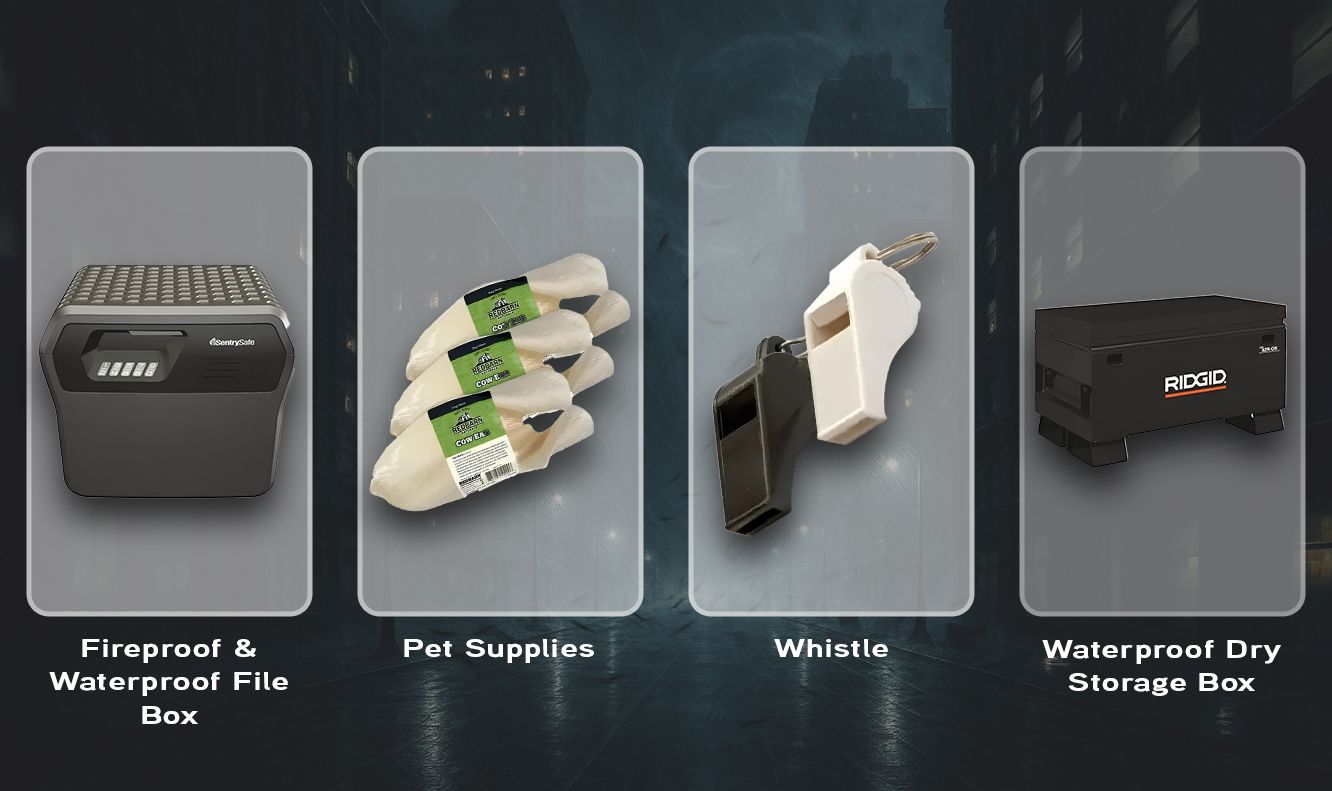
Hurricane Prep List: Pet Essentials
- Pet Food and Medicine: Pack at least 3–5 days' worth in sealed containers.
- Carriers and Leashes: Easily transport pets during evacuations or shelter stays.
- Comfort Items: Toys or blankets can help reduce animal stress during storms.
Document Protection Checklist:
- Waterproof Bags or Lockboxes: Store insurance papers, IDs, property titles, and prescriptions.
- Printed Contact List: In case phones lose power or signal.
- Evacuation Plan: Discuss routes and meeting points in advance with all family members.
Other Critical Essentials
Beyond hardware and tools, every storm kit should cover basic survival needs. While DK Hardware doesn’t sell food or fuel, we offer accessories to support their safe storage and use.
Add These Items to Your Checklist:
- Water: 1 gallon per person, per day for at least 3 days (more for pets or medical needs).
- Non-Perishable Food: Canned goods, snacks, dry fruits - choose no-cook options.
- Manual Can Opener: Often forgotten but essential for canned food.
- Disposable Supplies: Paper plates, cutlery, napkins, and trash bags.
- Fuel Storage: Use only certified gas cans or propane containers - never store indoors.
- Whistle: A simple, effective way to signal for help if you’re trapped.
- Waterproof Zip Bags or Dry Boxes: Keep batteries, electronics, and documents dry and secure.
DK Hardware carries helpful items like manual openers, portable lighting, waterproof bins, and storage containers to support your complete prep kit.
Stock Up Essentials To Stay Prepared For the Hurricane Season
Hurricane prep goes beyond a last-minute grocery run. It's about reinforcing your home, stocking innovative tools, and ensuring you're equipped to respond when help may take time.
So take a walk through your space and think practically. Are your windows protected? Do your doors seal properly? Can you clear debris or keep devices charged if the power is out for two days? Hurricane-proofing with the proper hardware is a smart investment for this season and for years to come.
Find impact-rated storm shutters, weatherproofing supplies, emergency lighting, and more at DK Hardware Supply. We ship fast across the globe, with bulk order discounts available. Additionally, follow us on social media - Facebook, Instagram, Pinterest - for instant updates and quick hacks, and keep an eye on this space for more such informative blogs and guides.