The Complete Guide to Door Latches: Types, Sizes, and How to Choose the Right One?

If you’ve ever stood there frustrated because your bathroom latch squeaks, your gate flops open, or your shed latch rusts solid, you’re in good company. Most of us don’t think about latches until they fail at the most inconvenient time. But the right latch does more than just hold a door shut; it keeps your life moving smoothly and saves you from constant fixes later.
This guide walks through everything you need to know about door latches: what they are, how they work, what types are worth choosing, and how to pick the right one for your situation.
Door latches may look like small hardware parts, but they play a big role in safety, privacy, and everyday convenience. From keeping bedroom doors shut to securing gates and cabinets, the right latch makes all the difference in how smoothly a space functions.
What’s the Difference in Latch & Lock?
When it comes to securing doors, gates, or cabinets, there are two key components that come into play: latches and locks. Both serve to keep things in place, but they work in very different ways. Understanding their differences can help you make the right choice for your security needs. Let’s break down what a latch and a lock are, how they function, and when to use each.
Main Parts of a Door Latch Explained
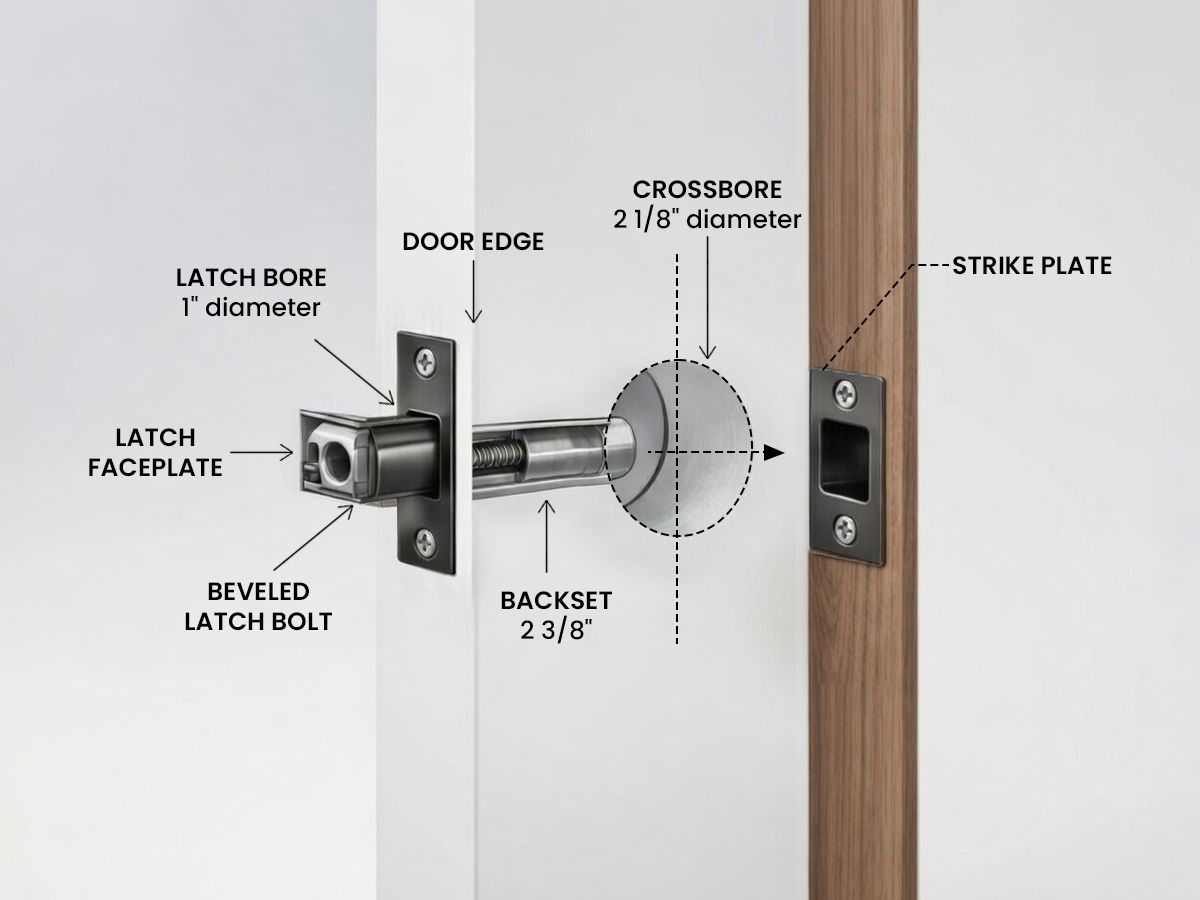
Understanding the individual parts of a latch makes it easier to diagnose problems and choose the correct replacement.
Latch Bolt
The latch bolt, also called a deadbolt, is the spring-loaded metal piece that moves in and out of the latch body. When the door closes, the bolt slides into the strike plate opening to hold the door shut.
Most residential latches use a beveled edge. The angled surface allows the bolt to retract smoothly when the door is pushed closed. Square bolts are less common and are typically found in specialty or heavy-duty applications.
Strike Plate
The strike plate is mounted on the door frame and receives the latch bolt. Proper alignment between the latch and the strike plate is critical. Even a small mismatch can prevent the door from closing correctly.
Strike plates also help reinforce the door frame and reduce wear over time.
Latch Faceplate
The faceplate is the visible metal plate installed on the edge of the door. It secures the latch body in place and affects both appearance and fit.
Faceplates may be round or square, depending on the door preparation. Matching the faceplate style ensures a clean installation and proper seating.
Spring Mechanism
Inside the latch body is a spring that allows the bolt to retract and extend. Over time, springs can weaken or break. When this happens, the latch may feel loose, fail to retract fully, or stop holding the door closed.
Spring failure is one of the most common reasons latches need replacement.
Main Types of Door Latches and Where to Use Them?
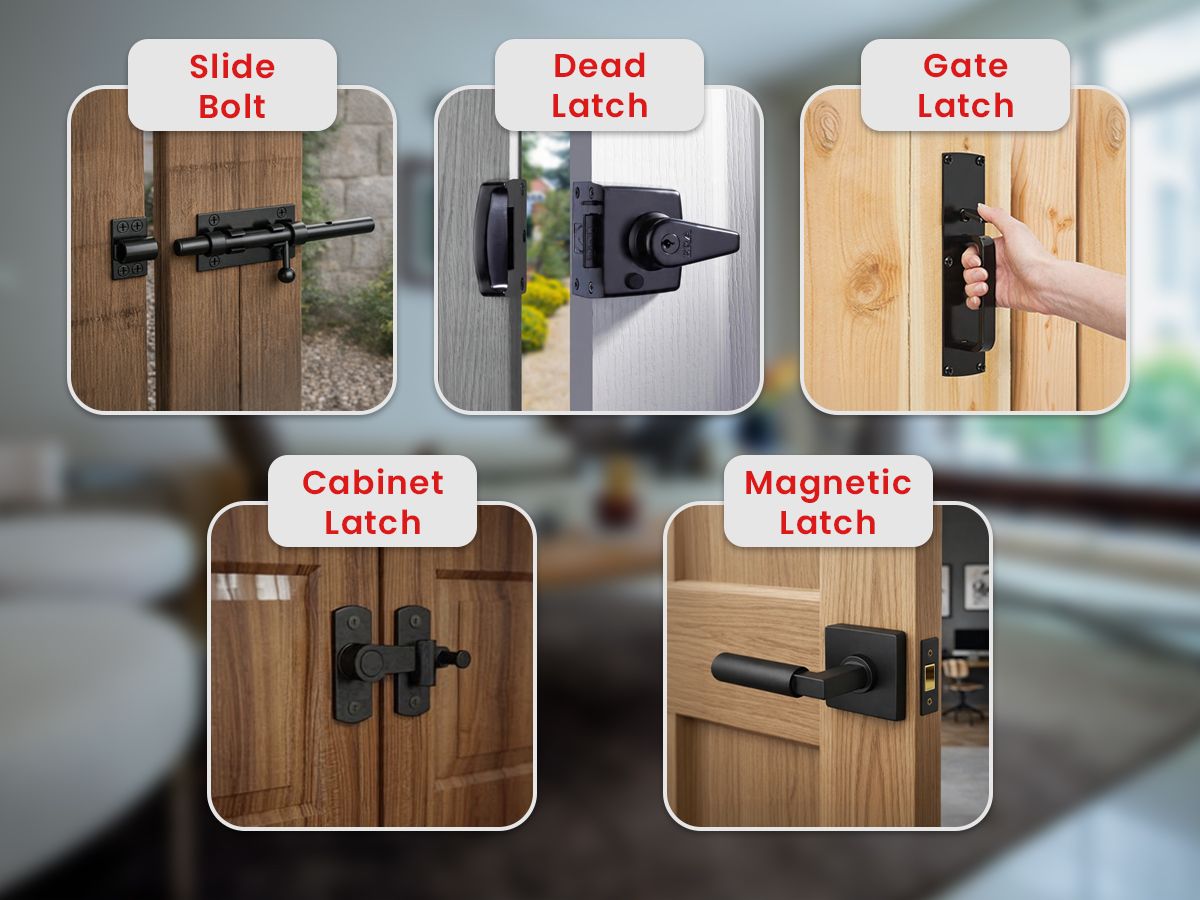
Understanding door latch types is essential for choosing the right hardware. Each type evolved to solve specific problems, and using the wrong one creates issues. Here's your complete overview:
Door Latch Types at a Glance
Slide Bolts & Barrel Bolts
Slide bolt latches (also called barrel bolts) consist of a metal rod that slides horizontally into a catch bracket or strike plate. You manually push or pull the bolt to lock or unlock the door. These come in various lengths from 2 inches to 12+ inches for heavy applications.
Where to Typically Use Them?
Most common applications:
- Bathroom doors: Privacy without permanent locking
- Bedroom doors: Quick security for changing or sleeping
- Shed doors: Simple outdoor security for tools and equipment
- Gate latches: Keeping yards secured
- Double doors: Holding one door stationary while the other opens
- Garage side doors: Additional security beyond the main lock
According to the National Association of Home Builders, slide bolts appear in approximately 67% of American homes, making them one of the most universal latch types.
Dead Latches
Dead latches (sometimes called deadlocking latches or self-locking latches) combine a spring-loaded latch bolt with an auxiliary security pin. When the door closes, the latch bolt automatically extends into the strike plate. The small guard pin prevents the main bolt from being pushed back with force or tools—a technique called "latch shimming" or "credit card entry."
The automatic action means you don't have to think about securing the door—it locks itself when it closes. This makes dead latches ideal for high-traffic areas where doors open and close hundreds of times daily.
Dead latches provide significantly better security than simple spring latches:
- Anti-shimming protection: The auxiliary pin prevents forced entry techniques
- Automatic engagement: No human error from forgetting to lock
- Stronger construction: Built with security in mind using hardened metals
- Professional-grade: Meets ANSI/BHMA Grade 1, 2, or 3 standards
The Insurance Institute for Business & Home Safety estimates that doors with dead latches are 40% less likely to be defeated through common forced-entry techniques compared to standard spring latches.
Where They're Commonly Installed?
Typical dead latch applications:
- Front entry doors: Primary residence entries
- Office building doors: Both exterior and interior office doors
- Commercial spaces: Retail shops, restaurants, professional offices
- Apartment building units: Individual unit entry doors
- Hotel rooms: Combined with electronic locks
- High-security residential: Upscale homes with enhanced security needs
Gate Latches: Built for Weather and Heavy Use
Gate latches face environmental challenges that indoor hardware never encounters. Temperature swings of 100°F between summer and winter, constant moisture exposure, UV degradation, and physical stress from wind loads all demand specialized construction.
Quality gate latches feature:
- Weather-resistant coatings: Powder coating, galvanization, or marine-grade finishes
- Corrosion-resistant materials: Stainless steel, heavy brass, or coated steel
- Sealed mechanisms: Protected from moisture and debris intrusion
- Expansion tolerance: Designed for metal expansion/contraction in temperature extremes
- UV-stable components: Won't become brittle from sun exposure
Heavy-Duty Benefits
Gate latches typically handle heavier loads than interior door latches:
- Support 100-300 lbs: Large wooden or metal gates create significant stress
- Withstand slamming: Wind can slam gates with substantial force
- Resist sagging: Quality gate latches maintain alignment even as gates settle
- Handle daily cycles: Some gates open/close 20+ times daily for years
The American Fence Association recommends gate latches rated for at least 150% of your actual gate weight to account for wind loading and impact forces.
Cabinet & Drawer Latches
Cabinet door latches serve multiple purposes beyond simple closure. They prevent:
- Items falling out: Poorly latched cabinets dump contents during earthquakes or vibrations
- Slamming noise: Soft-close mechanisms reduce household noise pollution
- Child access: Safety latches protect children from cleaning products and medications
- Pest entry: Properly latched cabinets seal better against insects and rodents
- Door drift: Keeps cabinet doors from slowly swinging open throughout the day
The National Kitchen and Bath Association reports that homes with properly functioning cabinet latches maintain better organization and experience 60% fewer minor kitchen accidents.
How to Choose Door Latch Material?
Material selection directly impacts latch lifespan, performance, and maintenance requirements. Let's break down what works best for different applications.
Material Comparison: Performance and Longevity
Stainless Steel
Why it works:
Stainless steel contains chromium (minimum 10.5%) that forms an invisible protective layer when exposed to oxygen. This passive layer self-heals when scratched, providing exceptional corrosion resistance.
Grade differences:
- 304 stainless: General outdoor use, non-coastal areas
- 316 stainless: Marine-grade, coastal homes within 10 miles of saltwater
- 410 stainless: Hardened option for high-security applications
Best applications:
- Coastal property gate latches
- Pool area gates (chlorine exposure)
- Humid climate outdoor hardware
- Commercial kitchens and food service
- Medical facilities requiring sterile conditions
Cost consideration: Stainless steel latches cost 2-4x more than coated steel options, but the 10-15 year lifespan without maintenance makes them cost-effective for challenging environments.
Brass
Brass (copper-zinc alloy) is a classic beauty with solid performance. It has been the hardware material of choice for centuries due to its combination of workability, appearance, and antimicrobial properties.
Types of brass hardware:
- Solid brass: Most durable, ages beautifully, can be polished
- Brass-plated: Steel core with brass coating—cheaper but prone to wear-through
- Lacquered brass: Coated to prevent tarnishing
Where brass excels:
- Historic home restorations requiring period-authentic hardware
- High-end interior doors in dry climates
- Decorative applications where appearance matters
- Bathroom doors (natural antimicrobial properties)
Maintenance: Unlacquered brass develops patina over time. Some homeowners love this character; others prefer to polish it annually. Lacquered brass maintains shine, but the coating eventually wears through.
Zinc Alloy
Zinc die-cast alloys (often called "zinc alloy" or "zamak") provide good performance at affordable prices. Modern zinc alloys with proper coating resist corrosion better than older formulations.
Strengths:
- Easy to cast into complex shapes
- Takes plating and coating well
- Lightweight (ideal for cabinets)
- Very affordable ($5-15 per latch)
Limitations:
- Lower strength than steel or brass
- Can't handle heavy doors
- Eventually corrodes in harsh environments
- May crack under extreme impact
Best uses: Interior cabinet latches, light doors, decorative applications, temporary installations, and budget-conscious projects.
Coated Steel
Heavy-gauge steel offers the highest strength-to-cost ratio. Modern coating technologies now provide excellent corrosion resistance:
Coating types:
- Powder coating: Baked-on polymer coating, excellent durability
- Galvanization: Zinc coating bonded to steel, great for harsh environments
- E-coating: Electrodeposited coating, uniform coverage
- Paint/Enamel: Budget option, eventually chips
Ideal applications:
- Heavy barn doors and farm gates
- Commercial gate latches
- Industrial applications
- High-security needs
- Severe weather exposure
The USDA Agricultural Research Service found properly coated steel gate hardware lasting 12-15 years in demanding farm environments—comparable to stainless steel at half the cost.
Cast Iron
Cast iron latches are the heritage choice. They have appeared on American buildings for 300+ years before modern materials arrived. They're still manufactured for restoration projects and rustic aesthetics.
Characteristics:
- Extremely strong and durable
- Distinctive rustic appearance
- Requires maintenance (periodic painting or oiling)
- Can rust if neglected
- Heavy (may require reinforced mounting)
Where it still makes sense:
- Historic home restorations
- Farmhouse/barn aesthetic
- Heavy-duty farm gates
- Intentionally rustic designs
Size Guide for Door Latch Installation
Door Latch Installation
Most door latches are easy to install with a few basic tools. Here's a step-by-step guide for installing a typical door latch:
Tools You'll Need:
- Screwdriver or drill
- Measuring tape
- Level
Basic Installation Steps
- Align & position the latch body on the door at the desired location.
- Use the measuring tape to ensure accurate placement, then mark where the screws will go.
- Attach the latch to the door, making sure it's level and aligned properly.
- Install the strike plate on the door frame where the latch will catch.
- Finally, ensure the latch engages smoothly and that the door can open and close easily.
Maintenance Tips for Door Latches to Last Long
Proper maintenance can greatly extend the lifespan of your door latch. Follow these simple maintenance tips to keep your latch working effectively:
- Monthly cleaning is a must. Wipe away dust and dirt from the latch and surrounding areas.
- Lubricate the latch regularly. Lightly oil moving parts to keep them functioning smoothly and prevent wear.
- Periodically tighten screws to ensure the latch remains secure.
- After exposure to rain or harsh weather, clean the latch to prevent rust and corrosion.
Why Choose DK Hardware for Your Door Latch Needs?
At DK Hardware, you'll find a wide selection of door latches, from simple interior models to heavy-duty outdoor latches. Here's why you should consider DK Hardware for your next latch purchase:
- A comprehensive range of latch types, including decorative locks and accessories.
- Commercial & residential quality latches that are suitable for both home and industrial use.
- High-quality latches from reliable, well-known manufacturers.
- Quick delivery and 24/7 active customer support to assist with your needs.
Whether you're upgrading your home's privacy, securing a garden gate, or outfitting a commercial building, DK Hardware has the perfect latch for your project.
Frequently Asked Questions
How to fix a door that won't latch?
A door that won't latch can often be fixed by adjusting the strike plate or tightening the screws on the latch. Ensure the latch and strike plate are properly aligned.
How to fix a broken latch door?
If the latch is broken, the mechanism may need to be replaced. Start by inspecting the latch mechanism and strike plate for any damage, and consider replacing the latch or repairing the components.
Can I use indoor latches outdoors?
It is not recommended unless the latch is specifically designed to be rust-resistant and durable in outdoor environments.
Which latch is best for gates?
For gates, heavy steel or stainless steel latches are the most suitable due to their ability to withstand frequent use and weather exposure.
Do latches fit all door sizes?
Most door latches are adjustable or come in multiple sizes, ensuring compatibility with different door dimensions.
Conclusion
A good door latch doesn’t demand attention. It just works. It closes with a soft click. It stays put. It doesn’t rattle, stick, or surprise you.
The latches you install today will either serve reliably for 10-20 years or frustrate you repeatedly until you upgrade. Choose once, choose right, and forget about latch problems for decades.
Browse durable door latch options at DK Hardware, built for real-world use and backed by manufacturers who understand that quality hardware makes all the difference.