
If you plan to install a new security door in your home, there are a number of features to consider, chief among them being screen door sizes. Here are some tips that will help you make an informed decision:
Sizing your screen door
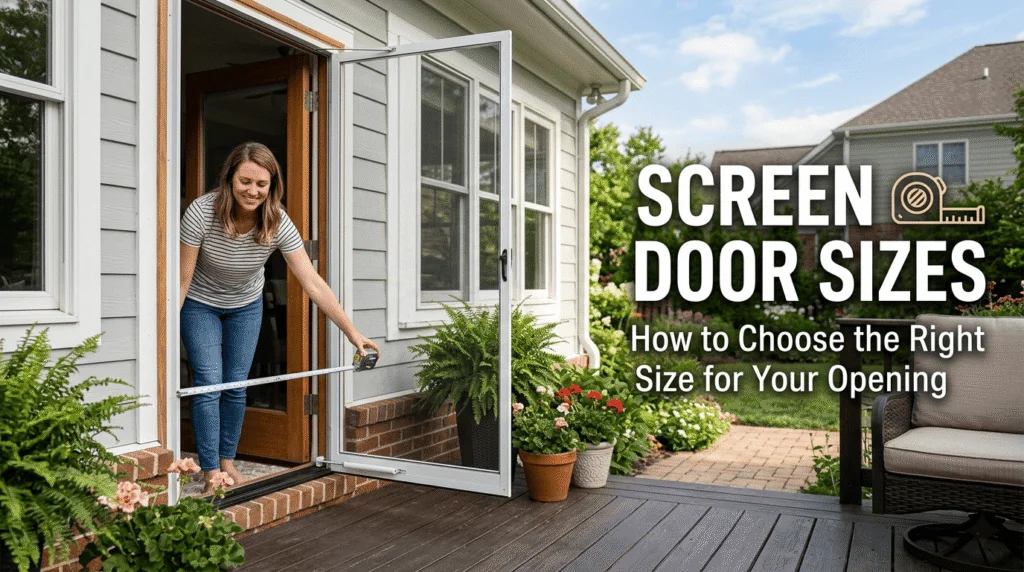
- Step outside and stand in front of your door opening. This is the perspective you want to determine the right screen door size.
- Measure the width from the inside to the inside of the door frame on top, middle and the bottom of the door frame. Note down the smallest width of these measurements.
- Now measure the height of the screen door frame, one on the extreme left side and one on the extreme right side. Note down the smaller of the two measurements.
- Subtract ¼ inch from the width of the frame. Also subtract ½ inch from the height of the frame. That will ensure adequate space for a good fit when the door is installed.
The common dimensions for a screen door are:
- 32’’ wide x 80’’ high
- 36’’ wide x 80’’ high
- 60” wide x 80” high
- 72” wide x 80” high
Door frame material
A majority of screen door frames are made of steel, metal alloy or aluminum. However, it is best to go for steel as it is the strongest among the other materials. While metal alloy or aluminum steel frames need to be 6 inches wide to deliver reliable strength, steel frames can be 2-3 inches wide and offer better air flow as well as visibility. CRL security doors are constructed from commercial grade steel, come with double hole security lock boxes, and full-length intruder resistant flystraps.
Also Read: How to Choose the Best Hardware for Your Windows and Doors: Balancing Functionality and Style
Powder coat versus paint
Painted screen doors may not resist prolonged exposure to sunlight very well, requiring repaint and adding to your maintenance costs. Powder coating is a better option, which is applied as a dry powder that doesn’t need a solvent to keep the binder and filler in suspension as is the case with paint. Applied electrostatically, it creates a hard finish that’s more durable than traditional paint. One choice to consider is a CRL Belvedere security door that comes with a durable powder coat paint finish and an elegant decorative design.
You can order your security screen door in various screen door sizes and designs, though black and white remain the classic and popular favorites as far as colors are concerned.
Choosing the wrong screen door size can lead to several problems that affect both functionality and appearance. Even if the difference seems small, it can make installation difficult and reduce the overall performance of the door.
Problems You May Face
- Poor Fit and Gaps:
If the door is too small, it can leave gaps around the frame. This allows dust, insects, and outside air to enter your home. - Difficulty in Installation:
A door that doesn’t match standard screen door size guidelines may not fit properly, making installation time-consuming and frustrating. - Door Not Closing Properly:
If the size is incorrect, the door may not align with the frame, causing issues with opening and closing. - Reduced Security:
A loose or ill-fitting door can compromise safety, especially if it doesn’t lock properly. - Unattractive Appearance:
A mismatched door can look uneven and affect the overall look of your entryway. - Extra Costs:
Choosing the wrong size may require adjustments, replacements, or even buying a new door, increasing your overall cost.
Why Size Matters
Most homes are designed around common screen door sizes, which makes it easier to find a good fit. Choosing a size outside these standards without proper measurement can lead to unnecessary issues.
Helpful Tip
Also Read : Door Closer Size Chart & Guide – ADA & Fire Safety Guidelines Explained
Always measure your door opening carefully and compare it with standard screen door size options before making a purchase. This ensures a proper fit, smooth installation, and long-term performance.
Selecting the correct size from the start helps you avoid these problems and ensures your screen door works efficiently while maintaining a clean and secure look.
Adjustable vs Custom Screen Doors: Which One Should You Choose?
When selecting a screen door, you’ll often come across two main options: adjustable and custom. Both serve different purposes, and choosing the right one depends on your door opening and specific needs.
Adjustable Screen Doors
Adjustable screen doors are designed to fit a range of openings. They can be expanded or reduced slightly to match common screen door sizes, making them a convenient choice for standard door frames.
Benefits:
- Easy to install
- Budget-friendly
- Works well for standard screen door size openings
- Readily available
Limitations:
- Limited flexibility for unusual sizes
- May not provide a perfect fit in all cases
Custom Screen Doors
A custom size screen door is made specifically to match your exact door measurements. This is the best option when your door opening doesn’t fit standard dimensions.
Benefits:
- Perfect fit for any opening
- Ideal for non-standard or unique door sizes
- Better appearance and alignment
- Improved sealing and performance
Considerations:
- Higher cost compared to adjustable options
- May take more time to manufacture and deliver
Which One Should You Choose?
- Choose adjustable doors if your opening matches common screen door sizes and you want a quick, affordable solution
- Choose a screen door custom size option if your door opening is unique or requires a precise fit
Helpful Tip
If your measurements fall outside the standard screen door size, it’s always better to go with a custom size screen door for better performance and long-term satisfaction.
In simple terms, adjustable doors are great for standard use, while custom doors provide a perfect fit for unique spaces.
You may also like to read : How to Choose the Best Patio Door Locks for Your Home
Conclusion
Choosing the right screen door size is an important step in ensuring a proper fit, smooth operation, and long-term performance. From understanding measurements and common screen door sizes to selecting the right material and finish, each factor plays a key role in getting the best results.
It’s also important to consider what happens if you choose the wrong size. Issues like poor fitting, gaps, and installation problems can affect both functionality and appearance. That’s why taking accurate measurements and comparing them with standard screen door size options is essential.
When it comes to selecting the right option, knowing the difference between adjustable and custom size screen door solutions can make your decision easier. Adjustable doors work well for standard openings, while a screen door custom size option is ideal for unique or non-standard spaces that require a perfect fit.
By understanding these factors and avoiding common mistakes, you can choose a screen door that not only fits well but also improves airflow, security, and the overall look of your space
Frequently Asked Questions
Yes, you can cut a screen door to fit a smaller opening. For sliding aluminum doors, this involves removing the frame, cutting the top/bottom sides using a hacksaw or 6-inch cut-off saw, and reassembling, typically by reducing the height. Wooden or solid vinyl doors can be trimmed with a saw, but it is often better to adjust the hinges or purchase specialized fasteners.
48-in x 80-in Screen Doors at Lowes.com. Give your home classic curb appeal with a variety of frame styles and designs. Make entry and exit easy for outdoor gatherings and enjoy a great view of your yard. Great views and easy operation combine in doors that virtually disappear when you’re using them.
Yes, screen doors come in a wide variety of sizes, with common hinged widths being 30, 32, and 36 inches, typically at an 80-inch height. Standard sliding screen doors usually fit 36, 48, or 60-inch wide openings, though custom-made, adjustable, and taller sizes (up to 96 inches) are available for non-standard doors.
Width should be measured in three locations: the doorway’s top, middle, and bottom. Height should be measured on both the left and right sides.