
If you’ve ever leaned on your deck railing and felt a bit of give, you know why railing safety matters. As the seasons change and humidity, fog, or frost set in, outdoor railings take on moisture, loosen bolts, and develop rust, all of which can compromise strength.
This guide from DK Hardware is designed for all homeowners and DIYers who want their railings to stay code-compliant, secure, and ready for winter. You’ll find a baluster spacing chart, practical inspection steps, and maintenance tips for every season.
What is Baluster Spacing?
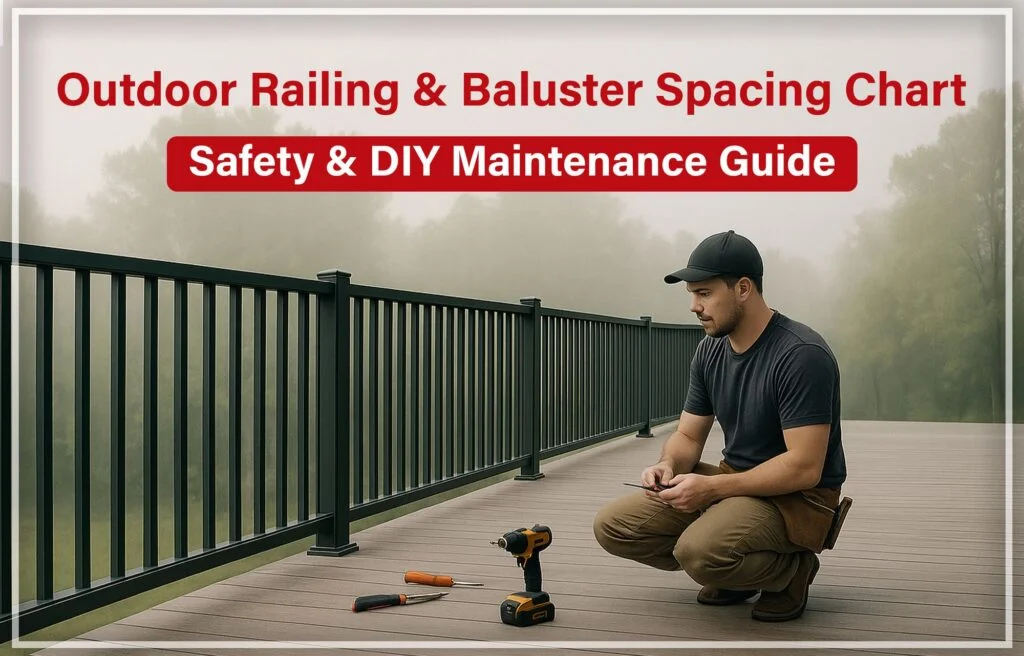
A baluster is the vertical post or spindle that supports the handrail in a railing system. The usual spindles that are used on staircases, balconies, decks, or terraces.
Baluster spacing refers to the distance between two balusters. This gap is not just decorative; it’s regulated by building codes for safety and structural integrity. Most US standards follow the 4-inch rule, meaning a 4-inch-diameter sphere must not pass through any opening in the railing.
Baluster spacing prevents small children or pets from slipping through, while also ensuring the railing can handle side pressure. Even a slight difference in spacing can reduce strength and stability, especially over long deck spans.
Standard Baluster & Railing Spacing Chart
Here’s a quick reference chart based on standard international building codes (use these as a benchmark, but make sure you always check local regulations before installation):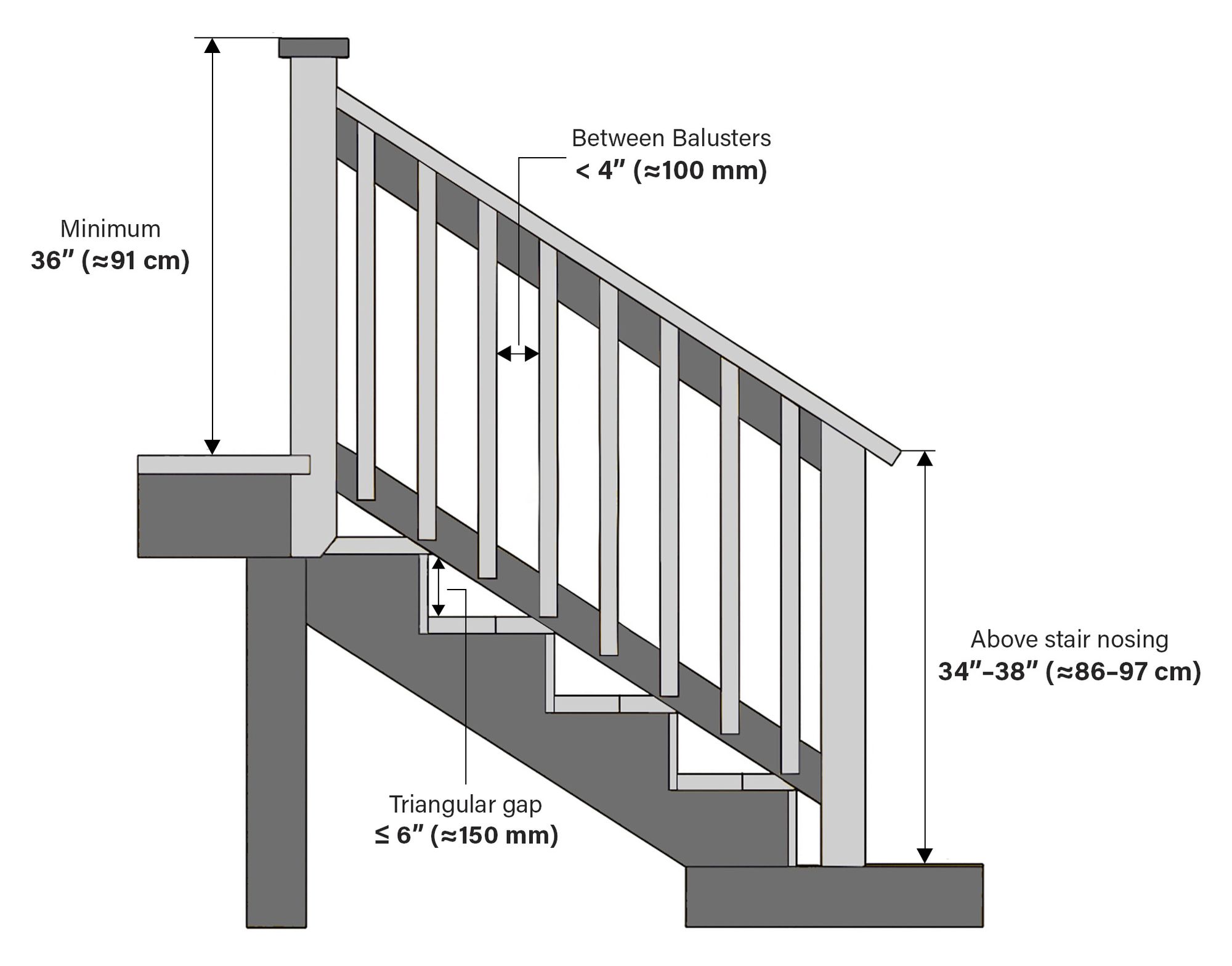
These measurements align with the International Residential Code (IRC) used across most of the United States.
How to Check and Adjust Baluster Spacing?
- Measure the gap between two balusters using a ruler or calliper.
- If the opening exceeds 4 inches (100 mm), you may need to add an extra baluster or adjust placement.
- For stairs, check the triangular gap at the bottom. It should not exceed 6 inches.
- Re-check post spacing — if posts are more than 8 feet apart, add a mid-support to reduce sway.
- Use a 4-inch ball (or object of similar size) to perform the “sphere test” — it should not pass through any part of the railing.
Also Read : Types of Sliding Glass Door Locks: Selection Guide, Types, Replacement Guide & More
Pre-Winter Railing Maintenance Checklist
As fog and dew return, outdoor hardware faces hidden challenges: metal expands, moisture seeps in, and corrosion starts building slowly. Follow this DK Hardware checklist before the foggy season to extend the life of your railings.
1. Posts & Anchors
Check for movement by pushing the railing sideways. Tighten all anchor bolts and replace corroded ones with stainless-steel or galvanized hardware. Any wobble at this stage is a red flag.
2. Balusters & Infill Panels
Confirm that gaps are still under 4 inches. Over time, metal or wooden rails can shift slightly. Tighten brackets and ensure all screws are firmly seated. Replace any cracked or rusted infill rods.
3. Top & Bottom Rails
Run your hand along the top rail — if you feel roughness, flaking, or softness, inspect for rust or rot. Clean off dirt and apply a corrosion inhibitor or protective coating like zinc primer or clear lacquer.
4. Fasteners & Joints
Exterior fasteners loosen naturally with temperature shifts. Using a ratchet or torque wrench, check each joint. Apply anti-rust spray on junctions, welds, and hinges — especially if your railing is near a coastal or fog-heavy area.
5. Surface Condition
Foggy nights leave condensation that sits on railing surfaces for hours. Clean algae or moss using mild detergent and water. Once dry, apply a weatherproof sealant around post bases and anchor points to block future moisture.
Seasonal Railing Maintenance Calendar
Check out this simple seasonal outdoor railing care plan that helps maintain safety, strength, and appearance all year.
You can start setting reminders on your phone for a quick check every quarter, which extends your railing’s life for years
How to Maintain Railing Finish?
A well-maintained railing doesn’t just look good; it protects your investment for years to come. Whether your railing is metal, wood, or glass, here’s how to keep its finish looking brand-new.
-
- For metal railings: Wipe down monthly with a standard, damp cloth, then dry thoroughly. Please avoid abrasive cleaners.
-
- For wooden railings: Reseal annually with weather-resistant varnish or oil-based coating.
-
- For glass or composite systems: Use DK Hardware’s non-abrasive glass cleaner to keep panels fog-free and streakless. Find all the cleaning products at DK Hardware..
If you live near the coast or in a humid city like Miami, consider upgrading to stainless steel or aluminum railing kits available on DK Hardware. They resist corrosion far better than untreated mild steel.
Why the 4-Inch Baluster Spacing Rule Matters
The 4-inch baluster spacing rule is one of the most important safety guidelines for any outdoor railing system. This rule means the gap between two balusters should not be more than 4 inches wide. It is commonly used for decks, balconies, staircases, and other baluster railing outdoor installations.
The main purpose of this rule is safety. Proper railing baluster spacing helps prevent small children and pets from slipping through the gaps or getting stuck between the balusters. It also improves the overall strength and stability of the railing system.
Why Proper Baluster Spacing Is Important
- Improves Safety:
Correct spacing reduces the risk of falls and accidents, especially on elevated decks and balconies. - Supports Building Code Compliance:
Most residential building codes follow the 4-inch spacing rule for safer outdoor railing systems. - Adds Structural Stability:
Properly spaced balusters help distribute pressure evenly across the railing, making it more secure and durable. - Protects Children and Pets:
Smaller gaps help prevent children or pets from slipping through the railing. - Creates a Clean and Balanced Look:
Consistent railing baluster spacing also improves the visual appearance of the railing system.
Where the Rule Is Commonly Used
The 4-inch spacing rule is commonly followed for:
- Deck railings
- Balcony railings
- Stair railings
- Porch railings
- Residential and commercial baluster railing outdoor systems