



When it comes to securing and maintaining commercial buildings, commercial door hardware plays a critical role. From high-security locks and exit devices to door closers and hinges, every component contributes to safety, functionality, and compliance with building regulations.
At DK Hardware, we specialize in providing top-quality commercial door hardware solutions tailored for businesses, property managers, and contractors. Whether you need durable locks for office buildings, retail stores, hospitals, or educational institutions, this guide will help you make an informed decision.
Browse our collection of commercial door hardware now!
What is Commercial Door Hardware?
Commercial door hardware refers to durable and secure locking mechanisms, handles, closers, hinges, and exit devices designed specifically for business and industrial applications. Unlike residential hardware, commercial-grade components are built to withstand high traffic, ensure security, and meet safety regulations such as ANSI/BHMA, ADA compliance, and fire codes.
Key Differences Between Commercial and Residential Door Hardware
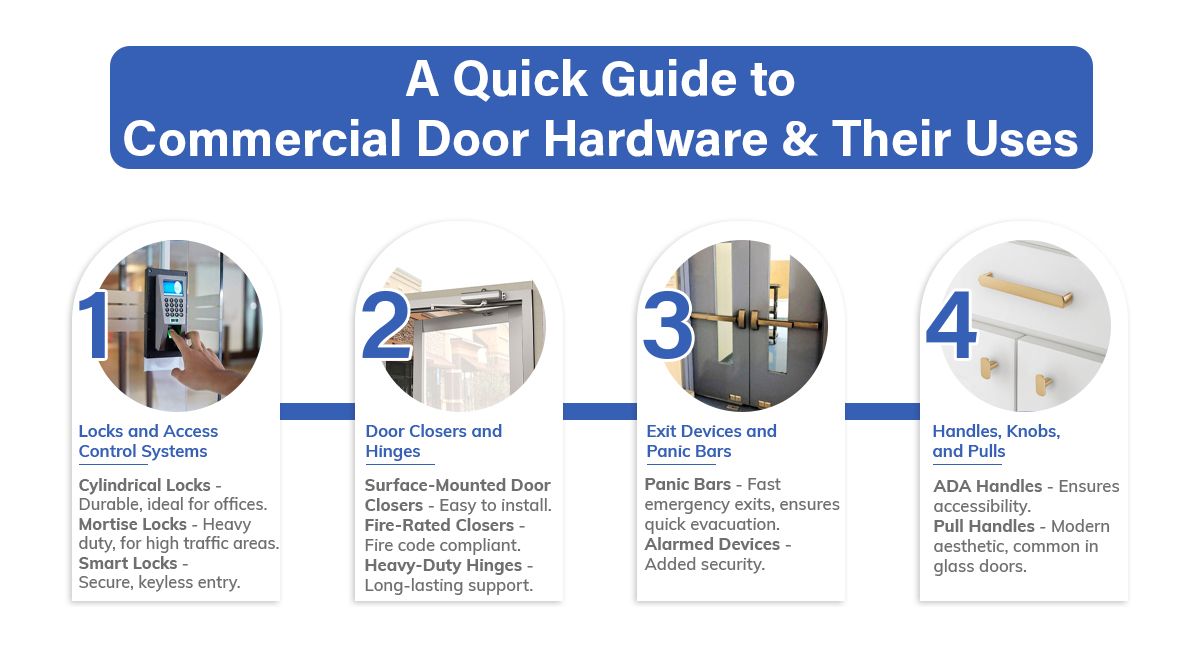
Types of Commercial Door Hardware & Their Uses
1. Commercial Door Locks & Access Control Systems
- Cylindrical Locks – Common in offices and commercial buildings for easy installation and durability.
- Mortise Locks – Heavy-duty, ideal for high-traffic environments such as hotels and hospitals.
- Smart & Keyless Entry Locks – Provides keyless access, perfect for offices and high-security areas.
- High-Security Locks – Advanced security options with restricted keyways and electronic systems.
2. Door Closers & Hinges
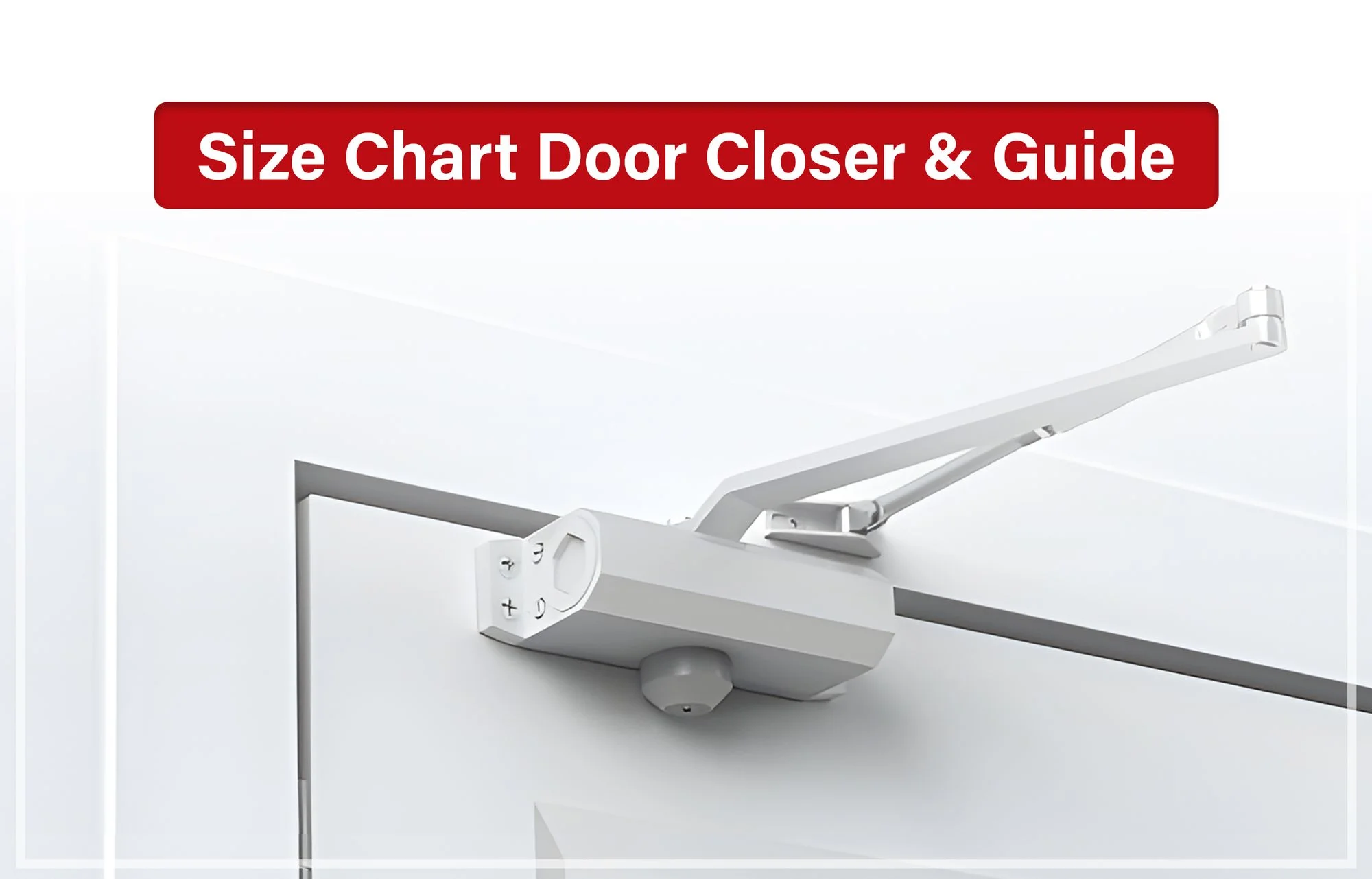
- Surface-mounted & Concealed Door Closers – Ensure controlled closing, reducing door damage and noise.
- Fire-Rated Closers – Required for buildings needing compliance with fire codes.
- Heavy-Duty Hinges – Ball-bearing and spring-loaded hinges for commercial doors.
Explore Our Door Closers & Hinges Now
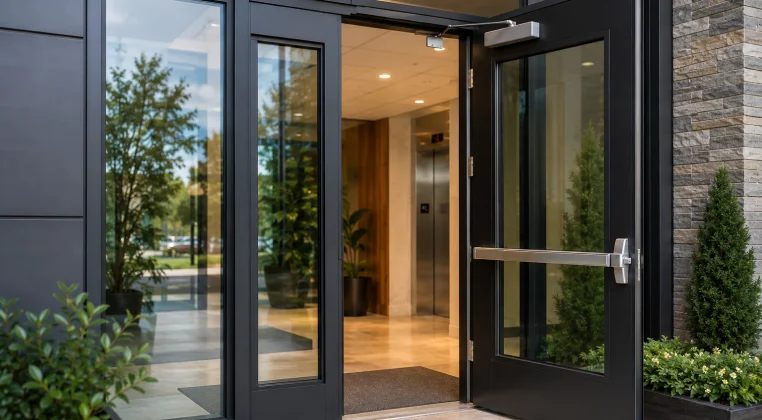
3. Exit Devices & Panic Bars
- Panic Bars – Essential for emergency exits, meeting fire safety regulations.
- Alarmed Exit Devices – Provide an added layer of security by sounding an alarm when the door is opened.
Shop Exit Devices & Panic Bars
4. Handles, Knobs, and Pulls
- Lever Handles – Ideal for ADA compliance.
- Knob Handles – Suitable for areas with lower accessibility needs.
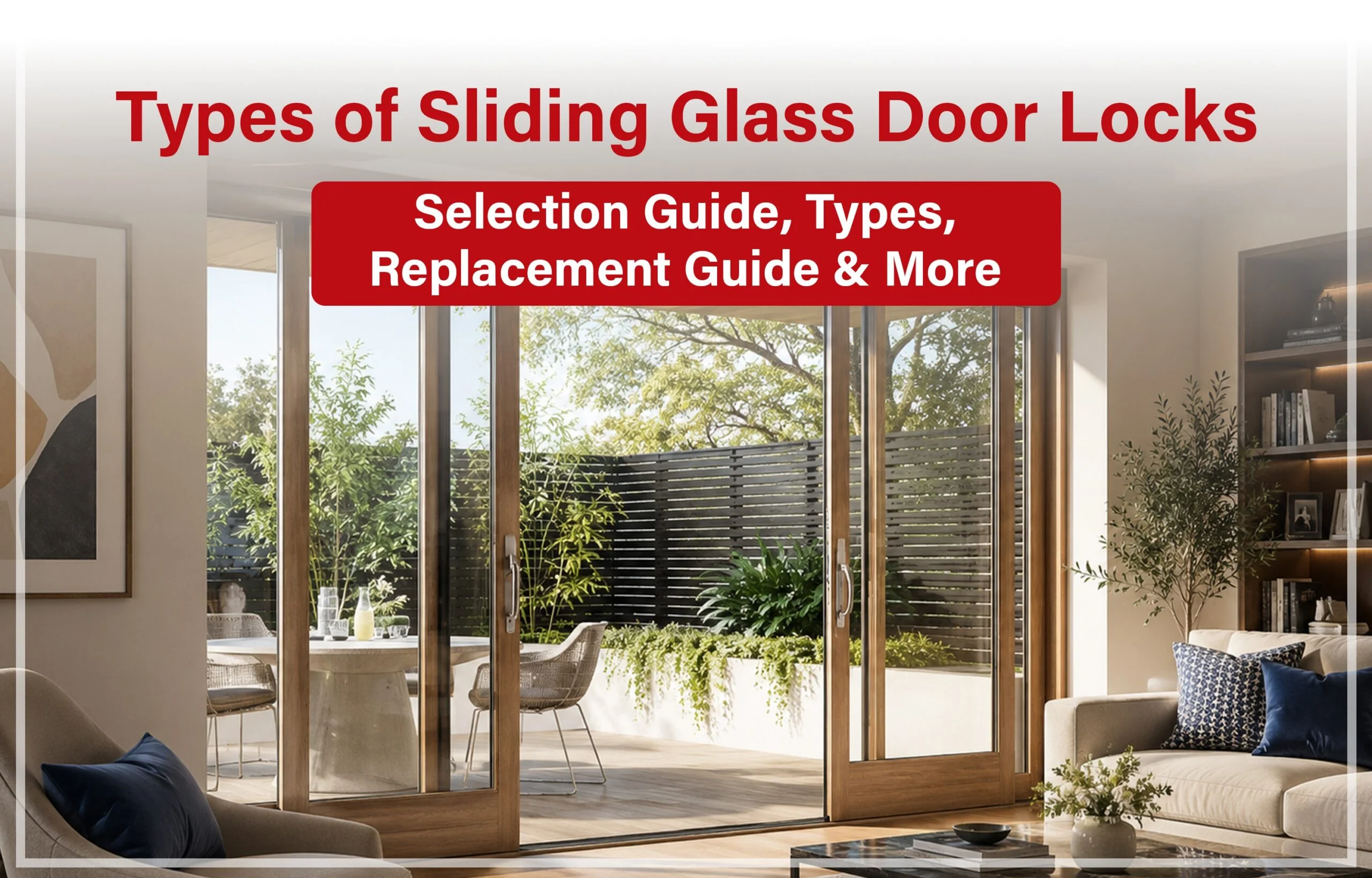
- Pull Handles – Common in glass doors and storefront entrances.
Find the Right Door Handles & Pulls
Key Factors to Consider When Choosing Commercial Door Hardware
Choosing the right commercial door and hardware is essential for safety, durability, and smooth daily operation. Whether you’re upgrading an office, retail space, or industrial facility, understanding a few key factors will help you select the best commercial door hardware for your needs.
- Door Type and Location:
Start by identifying where the door will be used. Commercial exterior door hardware needs to be stronger and weather-resistant, while interior doors can use lighter hardware. - Security Requirements:
High-security areas require advanced locks and access control systems. Choosing the right commercial entry door hardware helps protect your property and ensures controlled access. - Traffic and Usage:
Doors in high-traffic areas need heavy-duty components that can handle frequent use without wear and tear. - Durability and Material Quality:
Look for strong, corrosion-resistant materials to ensure long-term performance, especially for exterior applications. - Ease of Installation and Maintenance:
Proper commercial door hardware installation is important for performance and safety. Choose hardware that is easy to install and maintain over time. - Compliance and Standards:
Make sure the hardware meets safety regulations and building codes, especially for fire-rated doors and accessibility requirements.
Installation & Maintenance Best Practices
- DIY vs. Professional Installation – If unsure, hire a professional for proper setup.
- Regular Maintenance – Lubricate hinges, test locks, and inspect exit devices.
- Common Problems & Fixes – Address misaligned doors, sticky locks, and loose handles quickly.
Need Help? Contact Our Experts Here
Future Trends in Commercial Door Hardware
- Smart Locks & IoT Integration – Remote access control for businesses.
- Biometric Access Systems – Advanced security with fingerprint and facial recognition.
- Energy-Efficient Hardware – Sustainable and eco-friendly materials.
Why Buy Commercial Door Hardware from DK Hardware?
- Trusted Supplier – Years of expertise with thousands of satisfied customers.
- Wide Product Selection – Top brands at competitive prices.
- Fast Shipping & Support – Reliable customer service to assist you.
Common Mistakes to Avoid When Choosing Door Hardware
Choosing door hardware may seem simple, but the wrong decision can lead to security issues, frequent repairs, and unnecessary costs. With the right approach, you can avoid these common mistakes and select hardware that works smoothly and lasts longer.
One of the biggest mistakes is choosing hardware based only on appearance. While design matters, functionality and durability should always come first—especially in high-use areas. A stylish handle won’t be useful if it can’t handle daily wear and tear.
- Ignoring door type and usage:
Not all doors require the same hardware. Interior and exterior doors have different needs, and using the wrong type can affect performance. - Choosing residential hardware for commercial use:
Commercial spaces require stronger, heavy-duty options. Using lighter hardware can lead to faster damage and safety concerns. - Overlooking security features:
Locks and access systems should match the level of security needed. Skipping this step can put your property at risk.
Another common issue is not considering long-term maintenance. Some hardware may look good initially but require frequent repairs or replacements if the quality is low.
- Focusing only on price:
Going for the cheapest option often leads to poor quality. It’s better to invest in durable hardware that performs well over time. - Ignoring installation quality:
Even the best hardware won’t work properly if it’s not installed correctly. Proper installation ensures smooth operation and longer lifespan. - Not checking standards and compatibility:
Make sure the hardware meets safety regulations and fits your door type perfectly.
By avoiding these mistakes, you can choose door hardware that is reliable, secure, and built to handle everyday use with ease.
Conclusion
Selecting the right commercial door hardware is crucial for security, functionality, and compliance. By choosing high-quality locks, closers, hinges, and exit devices, businesses can ensure safety, durability, and legal compliance.At DK Hardware, we offer a wide range of commercial door hardware to meet every need. Browse our collection today and enhance the security of your business.